
New and improved
The Samsung Galaxy S26 revamps the brand's smallest flagship, bringing the design closer in line with Edge and Fold models while adding a larger screen. The camera bump now features Samsung's signature oval, and there's a Snapdragon 8 Elite Gen 5 for Galaxy on the inside.
Pros
- Larger 6.3-inch display with slim bezels
- Snapdragon 8 Elite Gen 5 paired with 12GB RAM
- Larger battery capacity
- Slight redesign with oval-shaped camera pedestal
Cons
- Not as compact as the Galaxy S25
- No significant camera upgrades
- More expensive than the Galaxy S25

A compact champ
The Samsung Galaxy S25 is one of the only 6.2-inch flagships still around. The Galaxy S25 is still capable, with a powerful Snapdragon 8 Elite chipset, but the phone is lacking in camera quality.
Pros
- Compact and lightweight design highlighted by a 6.2-inch screen
- Qualcomm Snapdragon 8 Elite platform is still impressive nearly a year later
- One UI is hitting its stride, and there are plenty more upgrades to come
Cons
- No Qi2 magnets or fast charging support
- Lacks key S25 Plus and Ultra features like UWB
- Same camera system as Galaxy S22
- Small 4,000mAh battery capacity
The Samsung Galaxy S26 is here to replace the Galaxy S25, and it begins to drift away from the status quo. While Samsung's base-model Galaxy phones have historically remained compact, the Galaxy S26 now features a larger 6.3-inch screen and bigger overall dimensions to match. That's not the only thing that's bigger than last year — the price tag is too. At $900, the cheapest entry-level Galaxy phone is more expensive than ever.
That puts the last-generation Galaxy S25 in an interesting position. If you don't need all the latest bells and whistles, is last year's model the better deal? The answer is probably yes, but let's dive into all the details. Here's how the Galaxy S26 compares to the Galaxy S25, and whether you should upgrade.
Samsung Galaxy S26 vs. Galaxy S25: Pricing and availability
Why you can trust Android Central Our expert reviewers spend hours testing and comparing products and services so you can choose the best for you. Find out more about how we test.

The Samsung Galaxy S26 was announced at a Galaxy Unpacked event on Feb 25, 2026, and is available for pre-order now at a starting price of $899.99. That gets you 256GB of base storage as standard, which is double that of the Galaxy S25. However, it's worth noting that the price of the Galaxy S26 is hiked even compared to the 256GB model of the Galaxy S25.
You can choose to get the 512GB model for an additional cost. Both configurations come with 12GB of memory. It's available in Cobalt Violet, Sky Blue, Black, and White colors. Silver Shadow and Pink Gold are available from Samsung's online store as exclusive options. General availability for the Galaxy S26 begins March 11.
Compare that to the Samsung Galaxy S25, which launched at $799 for 128GB of storage and 12GB of memory. The phone only goes up to 256GB of max storage in the U.S. It's available in multiple colorways, including Icyblue, Navy, Mint, and Silver Shadow. This model is likely to see major discounts once the Galaxy S26 becomes widely available.
Samsung Galaxy S26 vs. Galaxy S25: Design and display
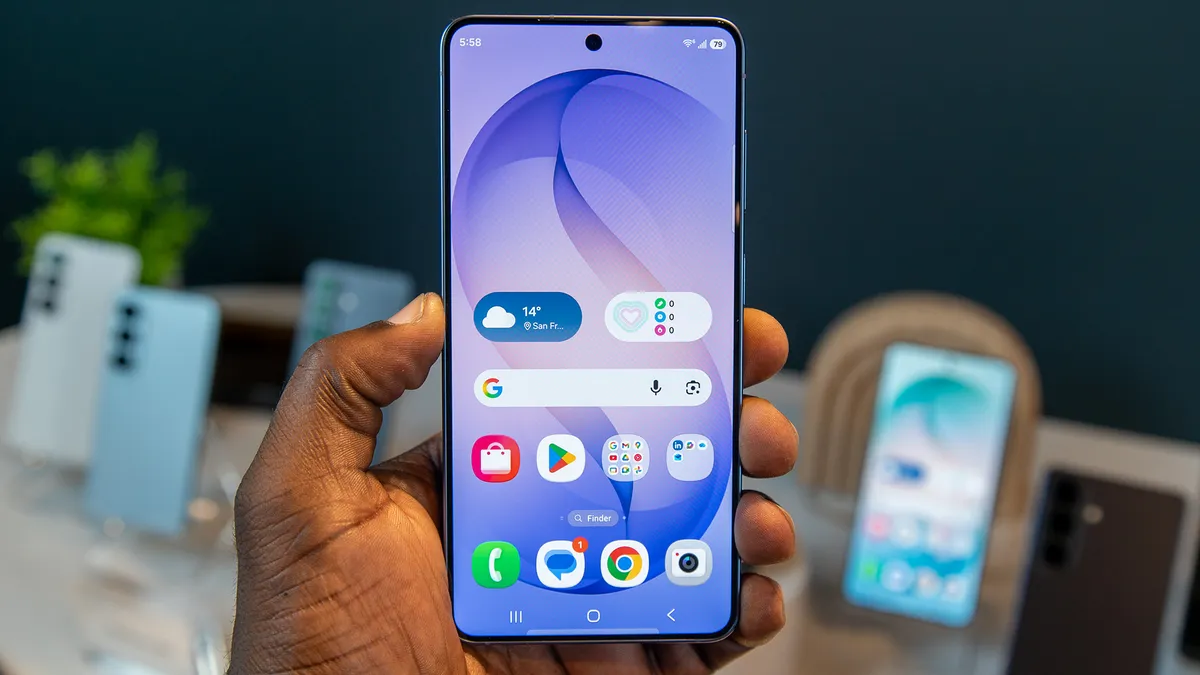
The Samsung Galaxy S26 design looks quite familiar to Galaxy fans, but it's a departure from what we're used to seeing on base models like the Galaxy S25. The phone offers a flat display and Gorilla Glass on the front, mostly flat edges, and a glass back. This time, the camera lenses sit on an oval pedestal protruding from the back, drawing inspiration from the Galaxy S25 Edge and Galaxy Z Fold 7.
Samsung added a 6.3-inch screen to the Galaxy S26, making it larger than the Galaxy S25 in terms of footprint. The rumored dimensions measure 71.7 x 149.6 x 7.2 mm. That makes the Galaxy S26 significantly taller, slightly wider, and just as thick as the Galaxy S25 it replaces.
The Galaxy S25 weighed in at 162 grams, but the Galaxy S26 is heavier, likely accounting for the larger screen and battery. It comes in at 167 grams, which is still pretty light by flagship standards.

Aside from the notable difference in screen size — 6.2 inches on the Galaxy S25 and 6.3 inches on the Galaxy S26 — the two phones will likely have identical display specs. You get Dynamic LTPO AMOLED 2X panels with 120Hz refresh rates and HDR10+ support on each model. As for the build quality, both phones are equipped with an Armor Aluminum frame and IP68 certification against dust and water ingress.
Although it was rumored as a possibility, Samsung did not include Qi2 magnets for charging and accessory connections on the Galaxy S26. It's equal in that regard. Additionally, the base-model Galaxy S26 doesn't get the Gorilla Armor 2 covering or Privacy Display feature found on the higher-tier Galaxy S26 Ultra.
Samsung Galaxy S26 vs. Galaxy S25: Hardware and specs

Samsung made a few upgrades to the Galaxy S26's internals, starting with the processor. It is powered by the Qualcomm Snapdragon 8 Elite Gen 5, but specifically the new made "for Galaxy" variant. This is available in North America, China, and Japan. The Samsung Galaxy S26 uses the Samsung Exynos 2600 chip in all other regions. Those processors are both paired with 12GB of RAM, so there's no upgrade in terms of memory.
The Samsung Galaxy S25, by comparison, uses the Snapdragon 8 Elite for Galaxy. It's working with 12GB of RAM, and is still a top performer for gaming, AI processing, and casual use. While the Galaxy S25 shipped with One UI 7, it can be upgraded to One UI 8, which is what the Galaxy S26 debuts running. To be precise, the Galaxy S26 is powered by One UI 8.5 out of the box, based on Android 16 QPR2. This upgrade will arrive to the Galaxy S25 soon.
Connectivity options are mostly consistent across both smartphones, with Wi-Fi 7, 5G, NFC onboard. That said, the new Galaxy S26 gets the upgrade to Bluetooth 6
Category |
Samsung Galaxy S26 |
Samsung Galaxy S25 |
|---|---|---|
Processor |
Snapdragon 8 Elite Gen 5 for Galaxy |
Snapdragon 8 Elite for Galaxy |
Display |
6.3-inch, Dynamic LTPO AMOLED 2X, 120Hz, Corning Gorilla Glass |
6.2-inch, Dynamic LTPO AMOLED 2X, 120Hz, Corning Gorilla Glass |
OS |
One UI 8.5 (Android 16) |
One UI 7 (Android 15) |
Storage |
256GB, 512GB |
128GB, 256GB |
RAM |
12GB |
12GB |
Security |
Ultrasonic fingerprint sensor |
Ultrasonic fingerprint sensor |
Connectivity |
5G (sub-6, mmWave), Wi-Fi 7, Bluetooth 6, NFC |
5G (sub-6, mmWave), Wi-Fi 7, Bluetooth 5.4, NFC |
Battery |
4,300mAh |
4,000mAh |
Charging |
25W wired, Qi2 15W wireless, 4.5W reverse wireless |
25W wired, 15W wireless, 4.5W reverse wireless |
Dimensions |
149.6 x 71.7 x 7.2 mm |
146.9 x 70.5 x 7.2 mm |
Weight |
167g |
162g |
Samsung upgraded the charging speeds of other Galaxy S26 models, but the base model was left out. You'll get 15W wireless speeds with Qi2 technology, although the phone won't support the newer Qi2.2 25W spec. The battery capacity is upped to 4,300mAh on the new model compared to 4,000mAh on the current Galaxy S25.
Unfortunately, we didn't get a big upgrade to the main camera system, either. The Galaxy S25 has a 50MP primary shooter and two secondary cameras. The ultrawide camera is still a 12MP, f/2.2 sensor and the telephoto camera is still a 10MP, f/2.4 lens with 3x optical zoom. These specs have remained the same for quite a while, and Samsung should be doing more here.
Rounding out the camera hardware is a 12MP, f/2.2 front-facing sensor with autofocus that's available on both models.
Samsung Galaxy S26 vs. Galaxy S25: Should you upgrade?

The Samsung Galaxy S25 is a serviceable smartphone that has the unique distinction of being one of the few smaller flagships left. With the Galaxy S26 leaving that identity behind in favor of a larger footprint, the Galaxy S25 holds onto some of its appeal.
However, there are key flaws of the Galaxy S25 that can't be ignored, like the three-year-old rear camera system that will only become more glaring as the phone ages. Samsung balances that out with the affordable cost (especially after frequent discounts) and standout components, like the Snapdragon 8 Elite for Galaxy platform. The seven-year software update promise ensures this phone will be supported for the foreseeable future.
If you want the best and are willing to pay for it, the Samsung Galaxy S26 is the recommended option. Samsung builds off and improves upon the Galaxy S25's strengths with a new Snapdragon processor and a bigger screen. The camera hardware is unchanged, but the battery is bigger.
With these upgrades in mind, the Galaxy S26 is still a great handset, even if it's not a major overhaul. Personally, I'd keep an eye out for Galaxy S25 deals, because it could be a great value at the right price.

Subtle shifts
The Samsung Galaxy S26 is a very different phone compared to the Galaxy S25 due to its larger screen and higher price tag. If you need a Samsung phone that's still somewhat compact, this device is enticing, but the Galaxy S25 is smaller and cheaper.
Still going strong
The Samsung Galaxy S25 is still relevant in 2026, and is a fantastic flagship — for the right price. The aging camera system is a notable drawback, but there are also future-proofed aspects like Wi-Fi 7, Snapdragon 8 Elite, and a long software update promise to consider.

