
Strong performer
The Samsung Galaxy S26 Plus takes a top performer and makes it even better, with Qualcomm's Snapdragon 8 Elite Gen 5 as the centerpiece. It also features faster charging, but there's little else in the form of major upgrades.
Pros
- Qualcomm Snapdragon 8 Elite Gen 5 is a gaming and general performance powerhouse
- Faster Qi2 20W wireless charging
- One UI 8.5 available out of the box
Cons
- No inbuilt Qi2 magnets
- Similar design as older Galaxy models
- No camera hardware upgrades

The Google experience
Google's Pixel 10 Pro XL is loaded with stellar AI features, from Gemini to Camera Coach. It's powered by the Tensor G5 chip with 16GB of memory and up to 1TB of storage. Paired with a great camera system and display, the Pixel 10 Pro XL is one of the best Android flagships on the market.
Pros
- Easy to charge with MagSafe and Qi2 support
- Gemini at the core with Nano and exclusive features like Camera Coach
- Seven years of Android OS upgrade support
- Triple-camera rear system with 5x telephoto lens
Cons
- Mandatory battery and performance throttling at 200 cycles
- Qualcomm still beats Tensor in gaming and raw performance
- Thicker and heavier than Galaxy S26 Plus
Google's Pixel 10 Pro XL was a momentous upgrade, and it set the new standard for what makes an Android flagship in 2026. The phone further improved its AI processing capabilities while adding Qi2 and MagSafe for the first time. In fact, the Pixel 10 Pro XL supports Qi2 25W for ultra-fast wireless charging. That put a lot of pressure on Samsung to match this innovation on the Galaxy S26 Plus.
The Samsung Galaxy S26 Plus is a bit of a letdown in that regard. The new smartphone gets the usual chip upgrade, software improvements, and faster wireless charging. However, the design and core experience is largely unchanged. So, how does the Samsung Galaxy S26 Plus compare to the Google Pixel 10 Pro XL? Let's look at everything you need to know about these two Android flagships.
Samsung Galaxy S26 Plus vs. Google Pixel 10 Pro XL: Pricing and availability

The Samsung Galaxy S26 Plus is official — and so is its long-rumored price hike. The phone was revealed Feb. 25, 2026 and is available for pre-order now at a retail price of $1,099.99 for the 256GB storage configuration. That's $100 more than the Galaxy S25 Plus. The smartphone is available in Cobalt Violet, Sky Blue, Black, and White colors, as well as Silver Shadow and Pink Gold available as Samsung online exclusives.
The Galaxy S26 Plus is only available in up to 512GB of storage. It hits shelves with full retail availability March 11.
Meanwhile, the Google Pixel 10 Pro XL is available now as the brand's top non-folding flagship. The phone retails for $1,199 for the base model with 256GB of storage, and it can be configured with up to 1TB. It's available in Moonstone, Jade, Porcelain, and Obsidian colorways.
Samsung Galaxy S26 Plus vs. Google Pixel 10 Pro XL: Design and display

There are only slight design changes for the Samsung Galaxy S26 Plus, and the differences simply align the smartphone with design languages of phones like the Galaxy S25 Edge and Galaxy Z Fold 7. Instead of having separated rear camera lenses like the Galaxy S25 Plus, the Galaxy S26 Plus includes a pill-shaped camera island that the three cameras sit atop of. This is the biggest design change for the Galaxy S26 Plus, and it's a relatively minor one.
Overall, the Galaxy S26 Plus still sports a rectangular and boxy chassis with flat aluminum side rails. It's still a glass sandwich, with Corning's Gorilla Glass Victus 2 securing the front and back of the phone. For durability, Samsung rounds out the experience with IP68 certification against dust and water ingress, which has been standard for a while now.

Phone brands usually find a way to upgrade the display on their devices annually, whether it's a slight size increase, smaller bezels, or higher brightness. But for all intents and purposes, Samsung's Galaxy S26 Plus features an identical display to the one inside the Galaxy S25 Plus. You get a 6.7-inch AMOLED panel with a QHD+ resolution. There are 120Hz adaptive refresh rates, ProScaler for QHD+, and at least 2,600 nits of brightness.
The most premium Samsung display features of this release cycle, including Privacy Display and Gorilla Armor 2, are exclusive to the Galaxy S26 Ultra.

Google's Pixel 10 Pro XL is slightly larger, measuring 6.8 inches with a 1344 x 2992 resolution. It's also an AMOLED panel with 120Hz variable refresh rates. Google does have the advantage of a brighter, 3,300-nit display. The Pixel 10 Pro XL also includes an accessibility setting for PWM-sensitive people, but this only doubles the standard PWM rate, and might not be suitable for everyone.
From a design standpoint, the Pixel 10 Pro XL is just as boxy as the Galaxy S26 Plus. However, it has a horizontal pill-shaped camera island near the top of the phone. The Pixel 10 Pro XL is much thicker and heavier than the Galaxy S26 Plus, with the Pixel camera bar protruding even further.
Google does offer IP68 protection and Gorilla Glass Victus 2 on the front and back. Additionally, it crams Qi2 25W magnets inside the Pixel 10 Pro XL. While the Samsung Galaxy S26 Plus doesn't include Qi2 magnets, the phone does utilize the 20W standard.
Samsung Galaxy S26 Plus vs. Google Pixel 10 Pro XL: Hardware and specs

The Samsung Galaxy S26 Plus uses the Qualcomm Snapdragon 8 Elite Gen 5 for Galaxy chip in North America, China, and Japan. Samsung is going back to a dual-chip strategy, shipping the phone with an Exynos 2600 processor in all other markets. Surprisingly, Samsung still opted to pair these chips with only 12GB of memory.
By comparison, the Pixel 10 Pro XL ships with a weaker Tensor G5 chip, but it's paired with a higher 16GB of RAM. Google Tensor chips already excel at AI processing, and the additional memory will only expand the use cases for the Pixel 10 Pro XL's on-device AI support. Additionally, the extra RAM could help the Pixel 10 Pro XL support future features that will be added throughout the phone's seven-year software support window.
Category |
Samsung Galaxy S26 Plus |
Google Pixel 10 Pro XL |
|---|---|---|
Dimensions |
158.4 x 75.8 x 7.3mm |
162.8 x 76.6 x 8.5mm |
Durability & Case Material(s) |
IP68 rating for dust and water resistance, Corning Gorilla Glass Victus 2 (front and back), Aluminum frame |
Gorilla Glass Victus 2 front-and back, IP68 |
Weight |
190g |
232g |
Display |
6.7-inch Dynamic AMOLED (1440x3120 pixels resolution), LTPO, 120Hz variable refresh rate |
6.8-inch Super Actua OLED, 1344 x 2992, 486 PPI, 1-120Hz, 3,300 nits |
Chipset / SoC |
Qualcomm Snapdragon 8 Elite Gen 5 (for Galaxy) |
Google Tensor G5 |
RAM |
12GB |
16GB |
Storage |
256GB/512GB |
256GB/512GB/1TB |
Sensors |
Under-display ultrasonic fingerprint sensor, Accelerometer, Gyroscope, Proximity sensor, Compass, and Barometer |
Under-display ultrasonic fingerprint sensor, Ambient light sensor Accelerometer, Gyroscope, Proximity sensor, Magnetometer, and Barometer |
Wireless Connectivity |
Wi-Fi 7, 5G (mmWave and Sub-6), Bluetooth 6, GPS, NFC, UWB, and USB-C 3.2 (with DisplayPort) |
Wi-Fi 7, Bluetooth v6, NFC, Dual-band GPS, 5G mmWave (NA only), 5G Sub-6, LTE |
Other Features |
Samsung DeX (wired & wireless), Galaxy AI |
Titan M2 chip, Ultrasonic fingerprint sensor, single-camera face unlock, Google VPN |
Battery & Charging |
4,900mAh, 45W (wired) and 20W (wireless) charging, 4.5W reverse wireless |
5,200mAh, 45W wired, 25W Qi2.2 Pixelsnap wireless |
Cameras (Rear) |
50MP wide-angle, 10MP telephoto (3x optical zoom), 12MP ultrawide |
50MP main, 48MP 123-degree ultrawide with macro focus, 48MP 5x telephoto, 4K/60 10-bit HDR on all cameras, 8K/30 on rear cameras |
Camera (Front) |
12MP wide-angle | 4K video recording |
42MP 103-degree Dual PD AF selfie | 4K video recording |
OS & Update Policy |
Android 16 with One UI 8.5 (preinstalled), seven years of OS and security updates |
Android 16 (preinstalled), seven years of OS and security updates |
The Google Pixel 10 Pro XL has a newer camera assortment, with a 50MP primary shooter, a 48MP ultrawide lens, and a 48MP telephoto with up to 5x optical zoom. Samsung didn't improve the main camera — or any camera — on the Galaxy S26 Plus, but there are claimed software improvements.
The 10MP telephoto and 12MP ultrawide are also unchanged. That is quite disappointing, as the 3x optical zoom length and the low-quality sensors are starting to feel very outdated in 2026.

Although the Galaxy S26 Plus charges faster wirelessly, it has the same capacity as its predecessor and still lacks Qi2 magnets.
Samsung Galaxy S26 Plus vs. Google Pixel 10 Pro XL: Which should you buy?
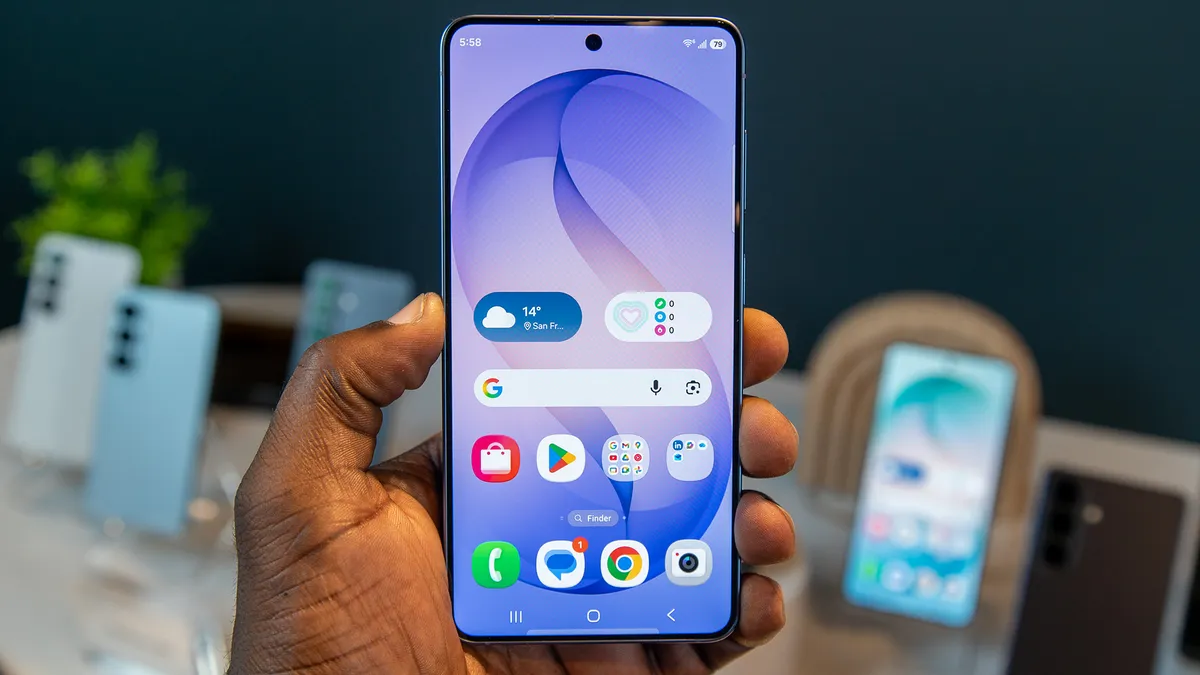
The Samsung Galaxy S26 Plus needed to be a big hit for Samsung, because recent releases from Google and OnePlus have raised the bar. However, it's hard to imagine the Galaxy S26 Plus doing that. Without magnetic charging and camera improvements, Samsung isn't doing enough to stay competitive. It could be doing more, and the overall design and feel might come off as stale to longtime Galaxy fans. The fact that the Galaxy S26 Plus is $100 more expensive certainly doesn't help matters.
Google is heading in a different direction. Compare the Galaxy S26 Plus to the Galaxy S23 Plus, and you won't find major differences. Do the same for the Pixel 10 Pro XL and the Pixel 7 Pro and it's wildly different. Google exudes polish with its recent flagships, even if they're a bit thicker and heavier than I'd like. We can't fault anyone for going with the Pixel 10 Pro XL today as a result, but there's also a case for wanting the raw power of the Galaxy S26 Plus.
A tough sell
The Samsung Galaxy S26 Plus didn't offer a full revamp for Galaxy users, but there are still upgrades worth considering. With Qualcomm's Snapdragon 8 Elite Gen 5 chip, the Galaxy S26 Plus immediately becomes one of the fastest phones on the market. It also sports a slimmer design than Google's handsets.
A premium feel
With the Galaxy S26 Plus not bringing major design or hardware changes, the Google Pixel 10 Pro XL has the more modern and premium build. It's also running smooth Google software with Material 3 Expressive flair.

