
Meta wants to clear out stock of its first-generation Ray-Ban Meta AI glasses. It's launched Black Friday deals for its old Wayfarer models, with its G15 Green and Clear Wayfarers at $238 ($60 off) and its more popular Matte Black Wayfarers with Polarized Graphite lenses at $263 ($66 off). Meta glasses have never gotten a major sale in the 2+ years since launch, making this a rare opportunity.
In some ways, this deal is a trap. Meta just launched its Ray-Ban Meta (Gen 2) glasses and Oakley Meta Vanguard glasses, both of which I gave glowing reviews. I particularly loved how Meta improved battery life this generation, while the first-gen models have shorter battery life by comparison.
Here's the problem: the new Ray-Bans start at $379, or $409 with polarized lenses, while Vanguard launched at $499, and I don't expect either device to get a major discount until 2027, based on past history. If you're shopping for your first smart glasses, it makes much more sense to buy the first-gen glasses for less and see if you like them or not; they'll last you until Meta's third-generation glasses in a couple of years.
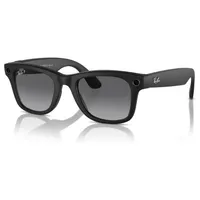
Why the original Ray-Ban Meta glasses are still worth buying
If you compare the Ray-Ban Meta Gen 2 vs. Gen 1, the difference isn't as stark as you'd assume. The photo resolution and FoV, storage space, IPX4 water resistance, mic and speaker quality, Wi-Fi/ Bluetooth connectivity, and apps are unchanged, while the weight is virtually the same.
The new glasses do give you a video resolution boost from 1080p to 3K and a couple of extra hours of battery life. But is it worth spending an extra $150 or so for the 2nd-gen polarized glasses, just to get these two perks?

Equally important, Meta has already brought its best second-generation features to its first-gen glasses, making them feel new. Vanguard glasses introduced Garmin integration in October, autocapturing videos at important race moments and reading out your health stats from your wrist; Meta brought this feature to Gen 1 glasses the next month.
Likewise, Vanguard glasses added improved video stabilization algorithms to make in-motion sporty videos look smoother, and Meta brought the feature to first-gen glasses in November without telling anyone. Meta isn't interested in gatekeeping its features to make you upgrade, which means you can buy the last-gen Ray-Ban deal without any FOMO.
The shorter battery life, you'll have to live with. But smart glasses fans lived with the 4-hour maximum for two years; you can too to get this Black Friday price! Or, if you can't, splurge on the full-price newer glasses without regrets!
Black Friday quick links
- Best Buy: major discounts on Chromebooks, Android phones, and more
- Amazon: official Black Friday discounts on tablets, smart home tech
- Walmart: early price drops on ASUS laptops, locked phones
- Samsung: new Galaxy XR headset, trade-in opportunities
- Verizon: free phones with new line, trade-in
- T-Mobile: free Galaxy phones, $300 back w/ 5G Home Internet
- Mint Mobile: 50% off Pixel 10, BOGO Unlimited plans
- AT&T: get a free Z Flip 7 with trade-in, new line
More Black Friday coverage - The best Google Pixel deals of Black Friday (so far)
- The best Samsung deals of Black Friday (so far)
- The best Motorola deals of Black Friday (so far)

