
2025 has shaped up to be a year of breakthroughs and experimentation for the tech industry; smartphones and wearables don't just look different, but have started to become more user-friendly, thanks to AI. Trifold devices have arrived, ultra-thin designs are on the rise, and smart glasses are gaining popularity.
At the same time, throw in rising prices driven particularly by global tensions, and this year also marked a turning point in consumer tech, giving us a feeling that we are indeed living in the future.
Here are some of the top stories and trends of 2025 that shaped the year.
The foldable glow up: Trifold goes mainstream
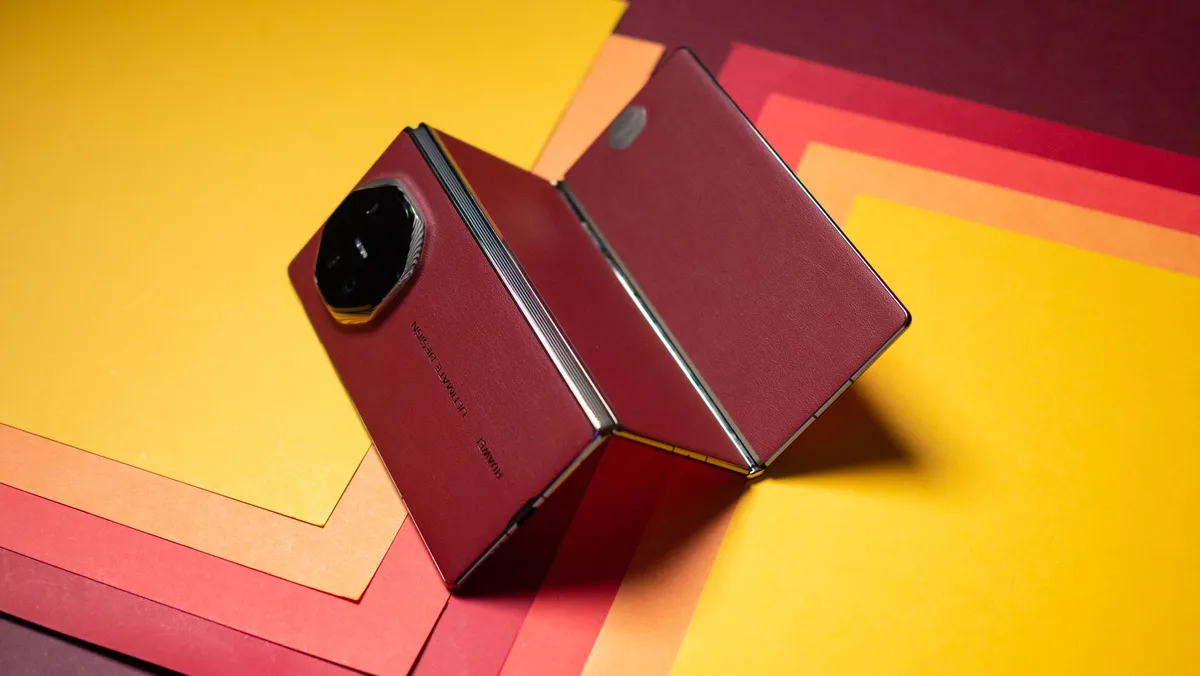
While tri-fold devices aren't a new concept, they didn't really catch on, at least not in this part of the world. Huawei's Mate XT was the first to prove that this concept was indeed possible; its limited availability made it more of a distant dream rather than a usable device.
But Samsung may have changed it overnight. The company finally launched the Galaxy Z Trifold on December 1, which is said to bring the power of "the most advanced foldable technologies" right into the palm of your hands.

Essentially, making the form factor more valid and widely available to the broader smartphone market. When Samsung launches a new device, the entire ecosystem follows, from Google optimizing Android for it to carriers that might be willing to subsidize it for consumers. This also means developers will start creating apps compatible with multi-window support on a larger scale. But it doesn't just end there.
Samsung's aim wasn't about adding another screen, but to experiment with whether a trifold could actually be a usable product. While it may not replace traditional slab phones anytime soon, it could double as a tablet and a productivity tool. This kind of shift in thought from "Why would you want this?" to "Who is this actually made for?" is a huge deal. This move by Samsung could push competitors to make their own tri-fold and potentially drive people to consider owning this device.
AI takes center stage as companies shift focus
Google I/O AI Partfrom r/google
For the past few years, AI has been a buzzword for every major tech company. However, in 2025, we've finally started to see it pulling its weight with models like Gemini 3 Pro, ChatGPT 5.2, Meta's Llama 4, and so on.
Instead of being in the background on many devices so far, generative AI has become a core feature of smartphones, to the point that it has been baked into every aspect of the device. It can literally "see" what you see, help you navigate better, and even let you "try on" clothes while shopping online. From search and photography to productivity tools, AI can even help you create better workflows to manage your day. So much so that we even have an AI Home robot in our midst.

This year wasn't about flashy demos — it was about showing us how AI could work its way into our lives. Companies like Google, Samsung, and OnePlus also redefined the user experience with more intuitive AI. Now it doesn't just respond to your commands, but it learns from your daily routine and gives you personalized suggestions in real time.
AI has rapidly transitioned from optional software to a foundational feature on smartphones. This has altered how we interact with our devices, marking a monumental shift in consumer tech.
The rise of the ultra-slim smartphones

This year, we also witnessed several tech companies obsessed with making super-thin devices like the Galaxy S25 Edge and the iPhone Air, measuring 5.8 mm and 5.6mm, respectively. Fitting all the necessary components into such incredibly slim casings is an engineering marvel in itself.
Despite the hype both companies tried to create with phones, the S25 Edge and the iPhone Air saw underwhelming sales, so much so that Samsung has reportedly decided to ditch the Edge lineup for good.
Yet we feel that the slim-phone era is really just getting started. These devices may serve as crucial stepping stones toward future foldables or even slimmer rollable phones. It almost feels like the manufacturers are using these designs to experiment with new materials, improved battery technology, and more, in a quest to slim down hardware without compromising on performance.
Tariffs, Tariffs and, more Tariffs

Well, all wasn't merry in the town of Tech. Earlier this year, under the Trump administration, the U.S. imposed hefty tariffs that impacted the tech supply chain.
At first, a 10% tariff was levied on all Chinese imports, which was later increased to 20%. At the same time, the U.S. also imposed 25% tariffs on goods from Canada and Mexico. At one point, tariffs went as high as 145%, which really shook up Apple investors, and the discussion quickly broadened to include all smartphone manufacturers. That imposed a 25% tariff on smartphones, including Apple, Samsung, and other OEMs that manufacture phones outside the country. The result?

This sent all the tech companies into a frenzy, leading Samsung to reportedly ramp up production of this year's Galaxy S25 series in a preemptive move and OnePlus to suddenly increase the price of its Watch 3. These tariffs even targeted semiconductor chips and key electronics, such as memory chips and circuits, which are mostly imported from outside the country, especially from China. After a few days, the White House decided to exempt certain electronics from these tariffs temporarily.
That said, it created enough confusion for consumers and tech companies alike. This means phones aren't getting expensive just because of their hardware, but also the global polices that dictate pricing. For now, Samsung and Google have both stuck to the same price tags with their flagships; however, this could change with your next phone.
XR finally gets its moment

XR had its best moments this year as several companies raced to put the future of tech on your face. Android pushed deeper into XR and VR with the launch of Samsung's much-awaited Galaxy XR headset in October, to challenge Apple's Vision Pro.
Galaxy XR came built on Android XR, and with Google’s Gemini AI baked right in. This means it’s not just a headset running Android apps but also an AI-powered device that understands your surroundings and responds through voice, vision, and gestures.

Meta also launched new AI-powered smart glasses this year, and the Meta Ray-Ban Display glasses push the boundaries of wearable tech. As these glasses let you do pretty much anything while keeping your phone tucked away, from checking messages to basically navigating through life, you get to do it all with just one glance at the in-lens display.
Google also didn't shy away from showing off its own innovations in the XR field. It gave us a quick surprise demo of its glasses at I/O and offered a first look at Project Aura from XREAL, which is reportedly equipped with a 70-degree field of view and optical see-through technology, set to launch in 2026.

