
What you need to know
- Qualcomm announced its FY Q2 2026 financial earnings on April 29.
- The company posted revenue of $10.6 billion, down 3% from a FY Q2 2025.
- This comes just days after reports of Qualcomm partnering with OpenAI on smartphone processors.
Qualcomm posted its most recent financial earnings on Wednesday, April 29, reporting $10.6 billion in revenue for fiscal year Q2 2026. This represents a 3% decrease in revenue when compared to fiscal year Q2 2025, when the company posted $10.98 billion in revenue. This aligns with expectations but suggests that Qualcomm is beginning to feel the effects of the RAM shortage that has plagued the industry in recent months.
"We are pleased to deliver results in line with our guidance, reflecting solid execution as we navigate a challenging memory environment," says Qualcomm CEO Cristiano Amon in a statement, noting how we're "in a period of profound industry transformation" due to the rise of AI agents.
Amon also touches on Qualcomm's new venture into AI chips for data centers, which are expected to arrive later this year and in 2027, although more details will be provided during Qualcomm's Investor Day in June.
Article continues below 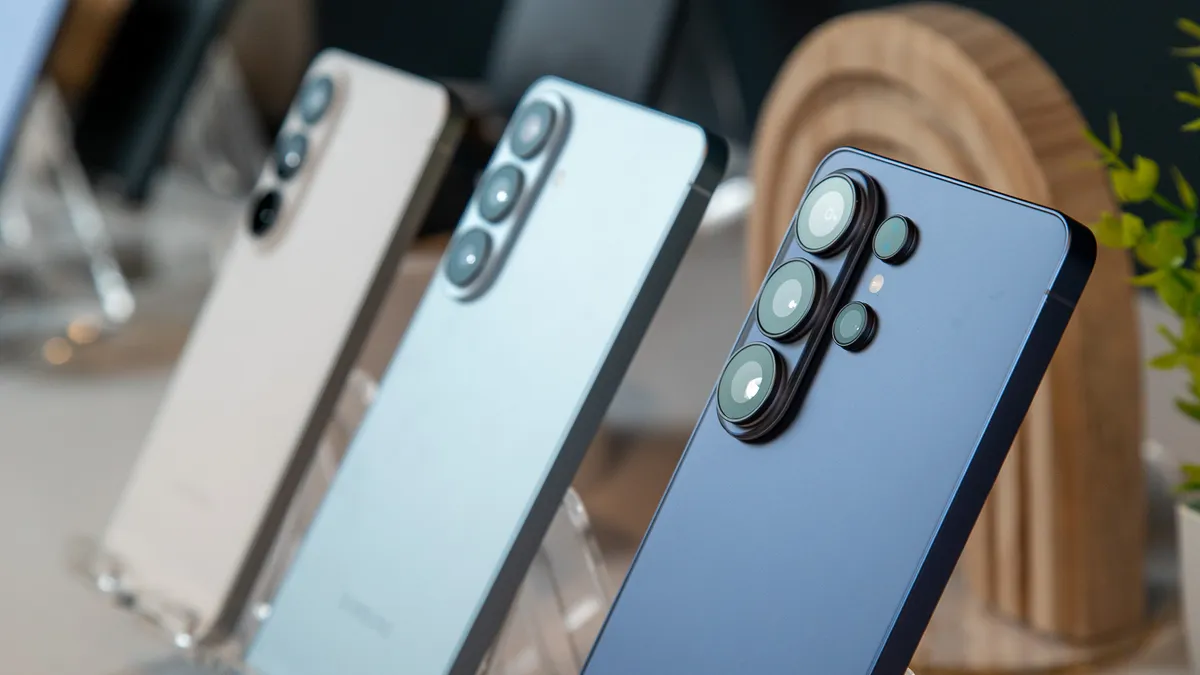
During the quarter, several flagship smartphones hit the market, including the Samsung Galaxy S26 series, for which Qualcomm holds more than a 70% market share with the Snapdragon 8 Elite Gen 5. However, despite seeing some impressive smartphones, Qualcomm's QCT division saw a 13% year-over-year revenue decline, while Automotive and IoT increased by 38% and 9%, respectively.
Further underscoring the pressure that memory shortages are having on the industry is Qualcomm's FY Q3 guidance, which falls in the range of $9.2B - $10.0B; lower than analyst expectations.
This is the result of lower channel inventory from OEMs, particularly in China, something Qualcomm anticipated as noted by Qualcomm CFO Akash Palkhiwala.
"These dynamics played out as expected in the second fiscal quarter and are also reflected in our third quarter guidance. As a result, in both quarters, our China QCT Android shipments are meaningfully below the scale of end-consumer handset demand."
However, he notes that there is a bit of light on the horizon, as revenue should return to growth in Q4 after bottoming out in Q3.

But as for predictions about whether the memory shortage could end next year, Amon says it's "a little early to talk about '27," noting that several factors are at play and working to address the shortage, such as new memory players building capacity.
"So we're going to have to monitor the situation in and see what happens in '27."
Android Central's take
It's interesting that the very thing companies are counting on to help drive more smartphone sales is the same thing that is causing prices of those same smartphones to increase. We've already seen it with the Galaxy S26 series, and now even Motorola has raised prices across its lineup, with the Razr 2026 series seeing some of the most dramatic price increased. Motorola has even opted to use the same chipset as last year's model in the Razr Ultra 2026, and while it didn't specifically say that memory prices were a factor, it's clear that it played a role in the decision.
Amon says 2027 is too early to predict if the memory shortage will end, but I'm not sure consumers can endure this for much longer, especially with global politics already affecting many goods.

