
What you need to know
- Google is integrating the Gemini 3.1 AI directly into Chrome for Android's toolbar starting in June.
- It allows you to summarize long articles, ask questions about the current page, and extract details without leaving the browser or switching apps.
- By opting into "Personal Intelligence," users can allow Gemini to personalize its answers based on their hobbies, family details, and preferences.
- Chrome will be able to execute multi-step tasks on your behalf, like using event ticket details to book a parking spot or automatically updating a recurring dog food order.
Chrome on Android is becoming far more ambitious than a mobile browser. At The Android Show: I/O Edition 2026, Google introduced a host of Gemini-powered capabilities that make Chrome feel more like an intelligent assistant that can do far more than just help you browse the web.
Google announced that next month, Gemini will show up inside Chrome for Android. This will be a full agentic experience built on Gemini 3.1. For users, this removes the need to toggle between apps or copy-paste snippets of text into an AI chatbot.
Instead, you can just tap a Gemini symbol in the upper right corner of Chrome’s toolbar and ask questions about the webpage you're looking at. This may include summarizing extensive articles, breaking down tough topics, or retrieving specific details from a page without interrupting your browsing.
The tech giant is also going hard on connected experiences across its ecosystem. Gemini in Chrome can work with Google apps like Gmail, Calendar, and Keep to do light work. You might take recipe components into Keep, make calendar events from webpages, or grab information from inside Gmail conversations, all within the browser.
If consumers opt in to Personal Intelligence, Google says the experience gets even more tailored. This allows Gemini to adapt replies based on your likes, hobbies, family, and other personal information. The argument here is convenience, though it also raises the usual questions about how much personal data people are comfortable feeding into AI systems.
Another addition is Nano Banana. The feature enables users to create or change visuals directly from webpages. You can transform online study material into an infographic or digitally furnish an apartment listing with AI-generated decor ideas.
Agentic 'auto browse' tool
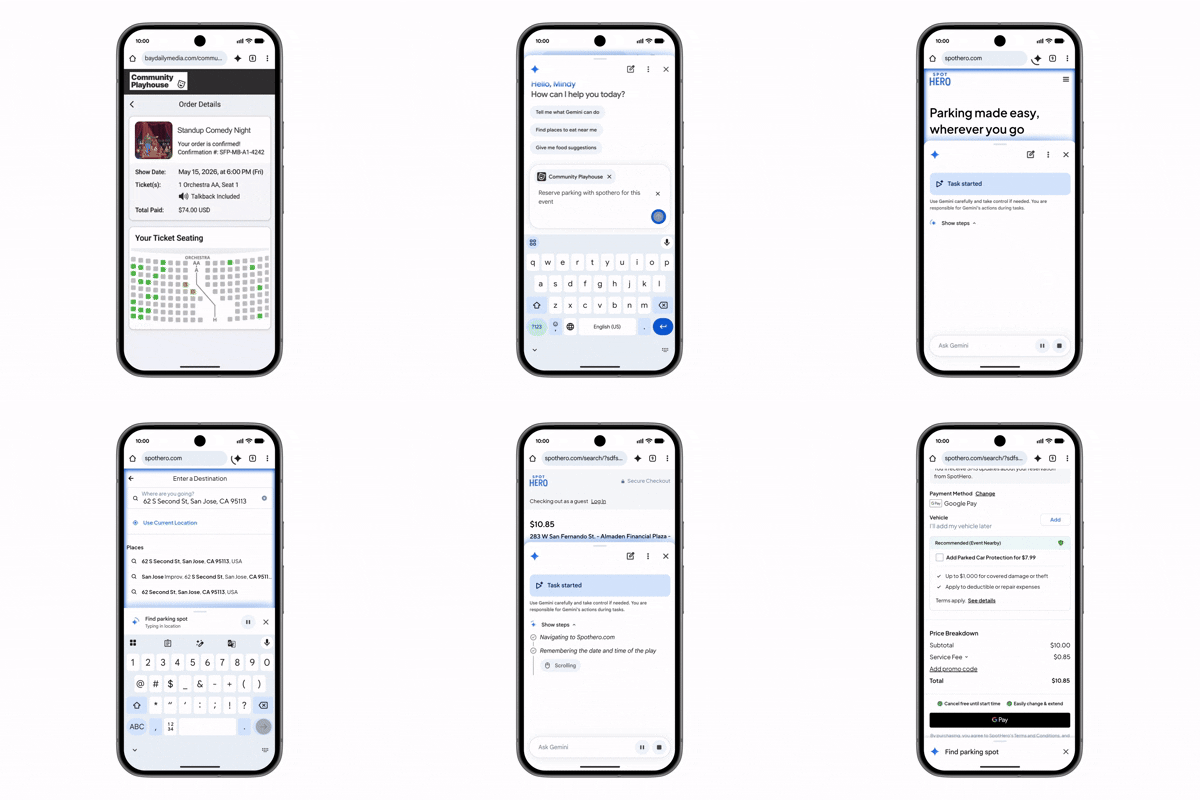
Then there’s auto browse, which may end up being the most important feature of the bunch. This is Google’s attempt at agentic browsing, where Chrome can actually carry out tasks on your behalf. The examples Google shared are intentionally practical: reserving parking through SpotHero using details from an event ticket or updating recurring Chewy pet food orders automatically as your puppy grows older.
Of course, giving an AI assistant the power to do things online also raises security problems. Google says these features include the same protections found on desktop Chrome, including defenses against prompt injection attacks. Sensitive actions like purchases or social media posts will still require user confirmation before completion.
There are a few limitations. Gemini in Chrome and auto browse require devices with at least 4GB of RAM, Android 12 or newer, and English-U.S. language settings. Google says Gemini in Chrome starts rolling out to select Android devices in the U.S. at the end of June, while auto browse will initially be limited to AI Pro and Ultra subscribers.
Android Central's Take
I can already see how this might be one of the more valuable Gemini integrations Google has launched yet. Having Chrome understand what I’m reading, pull info from my apps, and handle repetitive tasks sounds far more practical than another flashy AI demo that nobody uses after a week. At the same time, though, Google is asking users to trust AI with an increasingly huge chunk of their digital lives, from browsing habits to purchases and personal data. Whether that’s reassuring or a little disconcerting depends on how much control you’re ready to give up in exchange for saving a few taps.

