
Gemini is the catch-all name Google uses for a ton of AI-related software, from large language models (LLMs), to voice assistants, to coding agents. Gemini is also the heart of other Google services, like NotebookLM. Whether you want to vibe code with the latest AI models or you're simply curious why Google Assistant is disappearing, this guide will cover everything you need to know about Gemini and its features.
It turns out there are so many different versions of Gemini — Gemini 3.5 Flash, Gemini 3.1 Pro, 2.5 Flash, Flash-Lite, Pro, and Deep Think, most recently — that it can be confusing where to start! There's also Nano Banana and Nano Banana Pro, which are really Gemini models too (2.5 Flash Image and 3 Pro Image). And you may be wondering how it compares to GPT-5 and other AI.
Follow our detailed guide on how to use the Gemini app if you're looking for step-by-step advice. Otherwise, this Gemini guide will focus on the highlights: how Gemini works, which version you should use, whether you'll want to pay for Google's AI subscriptions, and everything else you should know!
How Google Gemini works

Google Gemini, like Google Search, responds to your questions by pulling from internet sources to answer them. The difference is that Gemini tries to format its own conversational responses instead of highlighting third-party sources.
Using Google's Language Model for Dialogue Applications (LaMDA) and its open-source "Transformer" machine-learning model, Gemini "reads" trillions of words from every publicly available source — then uses it to mimic human responses while rewriting information from the internet.
When you see a Gemini AI Overview in your Google Search results, it summarizes data from a few high-ranking sources, with the links visible under the "Show More" button. But the "AI" can't actually determine if these sources are correct; that's why you'll occasionally get incorrect AI responses based on satirical websites or trolling Reddit comments.
Because Gemini can "hallucinate" incorrect information, Google prevents it from discussing sensitive political queries where misinformation could be amplified. Even so, it sometimes is caught spouting gibberish, and you should look into the sources behind Gemini answers whenever possible.
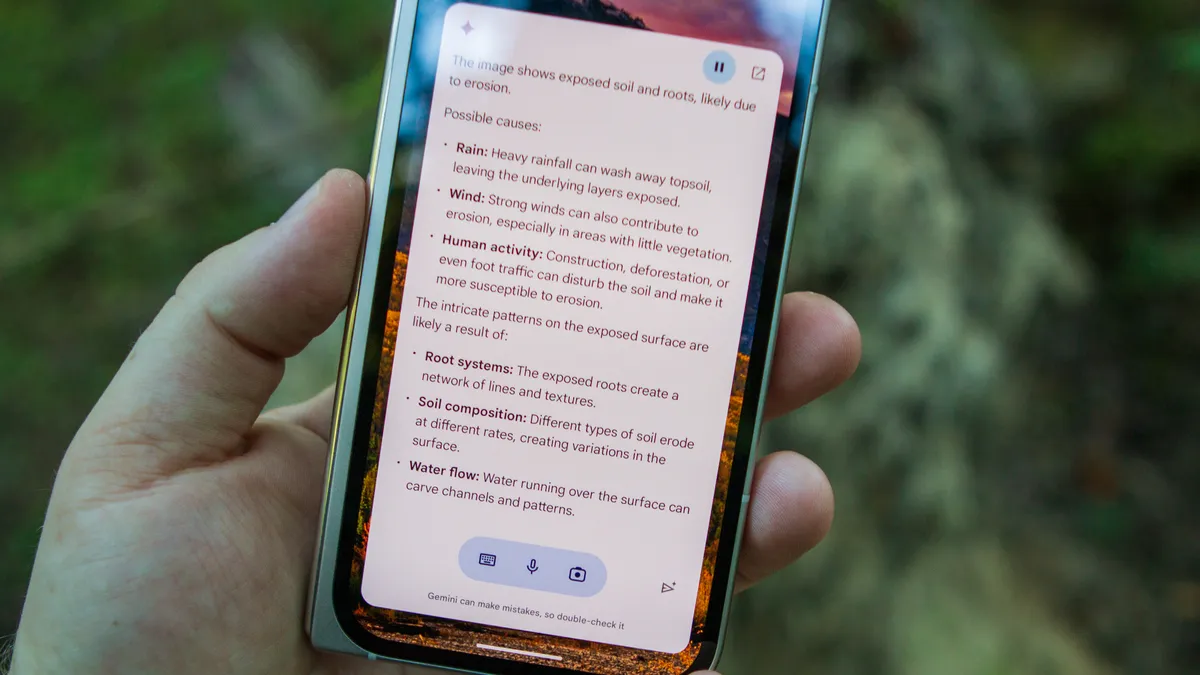
The web version of Gemini is focused on straightforward queries. Gemini is also available on both Android and iOS, where the Gemini app acts as a digital assistant, generates text and images, and performs actions within other Google apps like Maps and Drive.
With Gemini Live in the mobile app, you can have natural conversations with the AI, without wake words, and with past questions and context remembered to answer future questions. It can also interpret multimodal data like your shared phone screen, uploaded photos, and online videos.
Certain Gemini versions can go further, generating code, analyzing and summarizing reference materials, and solving complex math equations. These advanced models use more "tokens," interpreting more data simultaneously with more dependable results, while smaller versions like Gemini Nano and Flash are optimized for simpler questions and on-device applications.

It's hard to cover everything Gemini does, as it's baked into virtually every Google app and device now, from AI-assisted answers on Chrome and Gemini quick replies on the Pixel Watch 4 to deep Gemini integration into your Workspace apps and Gemini-enhanced Google Translate.
Most recently, Google announced that it would overhaul Google Home to add Gemini, with faster responses, AI-based "Home Briefs" of what its smart devices detected the previous day or night, and help with creating automations via Gemini text prompts. It's easy to simply tell the app, "Lock the front door and turn on lights," and have Gemini handle it.
Gemini for Home is rolling out now, and Gemini is also replacing Google Assistant on Android Auto. The assistant is also becoming deeply integrated with watches, phones, and Googlebooks as Gemini Intelligence.
Google Gemini versions and spin-offs

Below, we'll briefly summarize the latest versions of Gemini — both free and paid, consumer- or business-focused, and stable or experimental — that you should know about:
Gemini 3.5 Pro: The next "Pro" model currently in development at Google. We know that it's being used internally, and it'll roll out in June 2026, but no other information is available publicly.
Gemini 3.5 Flash: A go-to Gemini model that balances everyday performance and speed. It's currently available across the Gemini app, AI Mode in Search, Google AI Studio, Android Studio, and enterprise platforms worldwide. Google claims Gemini 3.5 Flash returns responses four times faster than its competitors. You can now use it for advanced queries, like coding tasks, without needing to switch to a "Pro" model.
Gemini 3.1 Pro: The successor to Gemini 3 Pro, Gemini 3.1 Pro is the current "Pro" model in the Gemini app, NotebookLM, Vertex AI, and the Gemini API. It's better at handling advanced reasoning tasks, and more than doubled the benchmark performance of Gemini 3 Pro, with a 77.1% on ARC-AGI-2. This is a gauge of a model's abstract reasoning skills and new logic patterns.
Gemini 3.1 Deep Think: A powerful AI model made for "modern challenges across science, research and engineering." You can try this model in Deep Think mode in the Gemini app, and it performs even better on the ARC-AGI-2 benchmark, scoring 84.6%. It's a complex problem-solving tool designed to help with tricky requests in the fields of mathematics, chemistry, and physics, to name a few.

Gemini Omni Flash: A new AI model that can create anything from any input. It combine images, audio, video and text to produce a single video output from natural-language prompts. You can try it in the Gemini app.
Gemini 3 Pro: The first Gemini 3 model, which is the company's best for multimodal understanding, agentic features, and vibe coding. Gemini 3 Pro became the leader on major AI benchmarks, and it's available across Gemini, AI Mode in Search, Google AI Studio, Vertex AI, Google Antigravity, and Gemini CLI.

Gemini 3 Pro Image (Nano Banana Pro): Google's most powerful image-generation model, Nano Banana Pro, can now implement refined text and language accuracy. It can also tap into Google Search to discover information that can be used to generate images.
Gemini 3.1 Flash Image (Nano Banana 2): Better known as Nano Banana 2, this model generates and edits images using AI. Compared to the original Nano Banana image generator, this version supports dynamic 512px to 4K image outputs in multiple aspect ratios. It's available for free in the Gemini app, AI Mode in Search, Google Lens, and developer apps.

Gemini Nano: Designed for on-device smartphone applications that work using a neural processing unit (NPU) without needing a network connection. It's designed for background and edge tasks in Android apps, originally only Google and Samsung apps but now available for all Android apps through the AI Edge SDK. Its main functions are transcribing conversations, summarizing information, and analyzing images for info.
Gemini Intelligence: A new, premium AI suite only available on supported devices. It'll first launch on the latest Google and Samsung devices, and it's centered around automation. Google says that "Gemini will navigate tasks for you — whether it’s snagging a front-row bike for your spin class or finding your class syllabus in Gmail, then putting the books you need in your cart." It can complete actions in the background, generate widgets from scratch, and autofill forms. Aside from phones, Gemini Intelligence will be available on certain smartwatches and Googlebooks.

Gemini Live: Gemini Live is the conversational AI that you'll see most frequently in Google's marketing blitz for AI and phones. Available on both Android and iOS with multiple languages and voices, Live remembers your past questions within a specific conversation. It provides more information with real-time screen sharing or answers questions via your camera feed. Google has also launched Live Search, a similar multimodal AI tool built into its Search engine.

Gems: Google AI Pro lets you create a customized version of Gemini, called a "Gem." You can give parameters like "you're my running coach, give me a daily running plan and be positive, upbeat, and motivating," and then speak to a "Gem" with that tone and underlying goal. There are premade Gems that can serve as writing or coding partners, or Experimental Gems like a chess champion.
Most recently, Google Workspace added AI Gems to let students or workers create specialized assistants. For example, a "copywriting Gem" can help with using approved language for clients, or a fake CEO can "pressure test" an idea so you're ready to answer questions about it. Google is also bringing Gems to its Classroom app, allowing teachers to create specialized Gems that will help students study with targeted information.
Gemma: Google's open AI spin-off of Gemini. Different Gemma builds "share technical and infrastructure components" with Gemini, except developers can use the code to build their own AI projects. Specific variants like CodeGemma (for coders) and RecurrentGemma (for researchers) are more specialized, while Gemma 2 is more of a general smarts upgrade, with 9-billion and 27-billion variants. They're all available through Google AI Studio.
Vertix AI: An enterprise AI development platform that includes all of the various Gemini versions, as well as over 160 other open-source AI platforms like Gemma and Llama. This is the most robust option, but is only worth it for businesses.
Imagen: Currently on Imagen 4, this text-to-image model is available through the Gemini app and web versions and can produce photorealistic art based on text prompts. Third-party apps like Adobe Firefly also embed Imagen and Veo for image and video generation.

Veo: Google's text-to-video model that "generates high-quality, 1080p resolution videos that can go beyond a minute, in a wide range of cinematic and visual styles." It will come to the VideoFX tool and YouTube Shorts, and is built off of several AI models (including Gemini). Veo 3 is the latest model that adds audio generation.
Lyria: Google's music generation model leverages generative AI to produce a continuous stream of music controlled by user actions. Lyria 2 is the latest model used to power Music AI Sandbox.
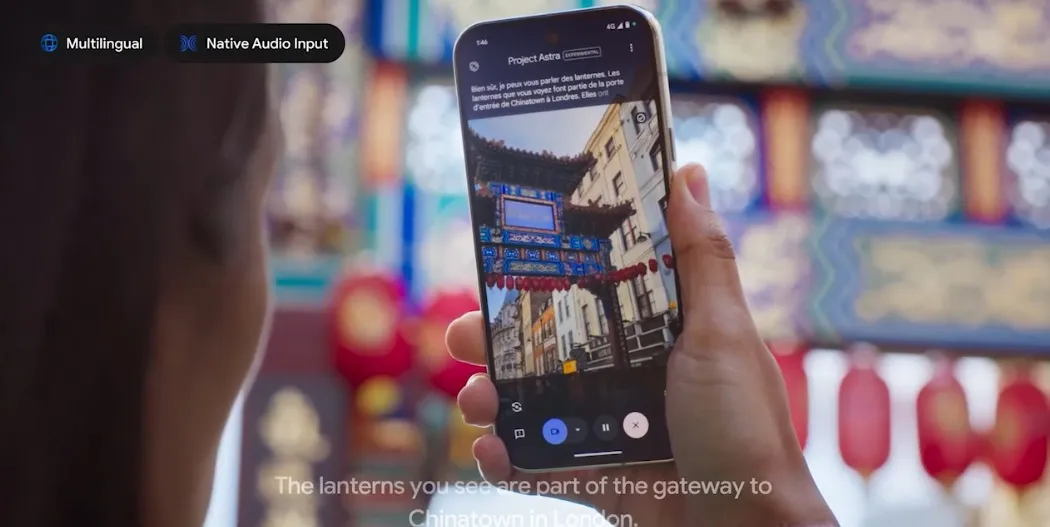
Project Astra: Gemini 1.5 Pro can handle multimedia, but is mainly designed to interpret one thing at a time. Project Astra is a multimodal AI that can answer a contextual question like "What am I looking at?" based on visual data. Google recently announced Android XR, a software program for mixed reality headsets and smart glasses, and Astra may end up being a prototype for that platform. Project Astra is officially available now as Gemini Live with screen sharing and live video support.
Project Mariner: A project designed to handle your browsing needs for you, Project Mariner was introduced as a prototype Google Chrome extension. The agents within Project Mariner enable the software to research information, book shows or other events, and research topics all at once. Google DeepMind's CEO hopes to morph Gemini into a "world model," and according to him, it's this level of multitasking that can assist in that transformation. Project Mariner is shut down as of May 2026.
Google AI Studio: This website is where you can go to start working on Gemini projects, with the Gemini API available and tools like a code "Cookbook" and prompts available to help you get started. This is also where Google's Veo 2 video-generation model is available.

Google Antigravity: An AI-powered integrated development environment (IDE) available as a free app on macOS and Windows. It helps users vibe code or build apps from scratch using Gemini models.
Gemini Spark: This is a so-called "24/7 personal AI agent" powered by Gemini 3.5 Flash. It's built on the backbone of Google Antigravity and taps into the Google Workspace ecosystem. It runs in the cloud and is opening up to Google AI Ultra subscribers in beta now.
Gemini Daily Brief: A personal, AI-powered morning digest that pulls information from Workspace apps to surface and prioritize information based on what matters most. It's similar to Daily Hub on Pixel phones or Now Brief on Galaxy phones. Gemini Daily Brief is rolling out now for Google AI Plus, Pro, and Ultra subscribers in the U.S.
Gemini Omni: A conversational video editor built right into the Gemini app. It can create and edit videos using multimodal prompts, like those that include text or images. Simple phrases like "zoom in on the subject in this video" tell Gemini Omni everything it needs to provide a polished edited video.
Search Agents: AI agents in Google Search that run in the background 24/7 and monitor specified information. You can build mini apps in Search that serve as custom dashboards or trackers for tasks. Search Agents will roll out later this summer.
Key Gemini features
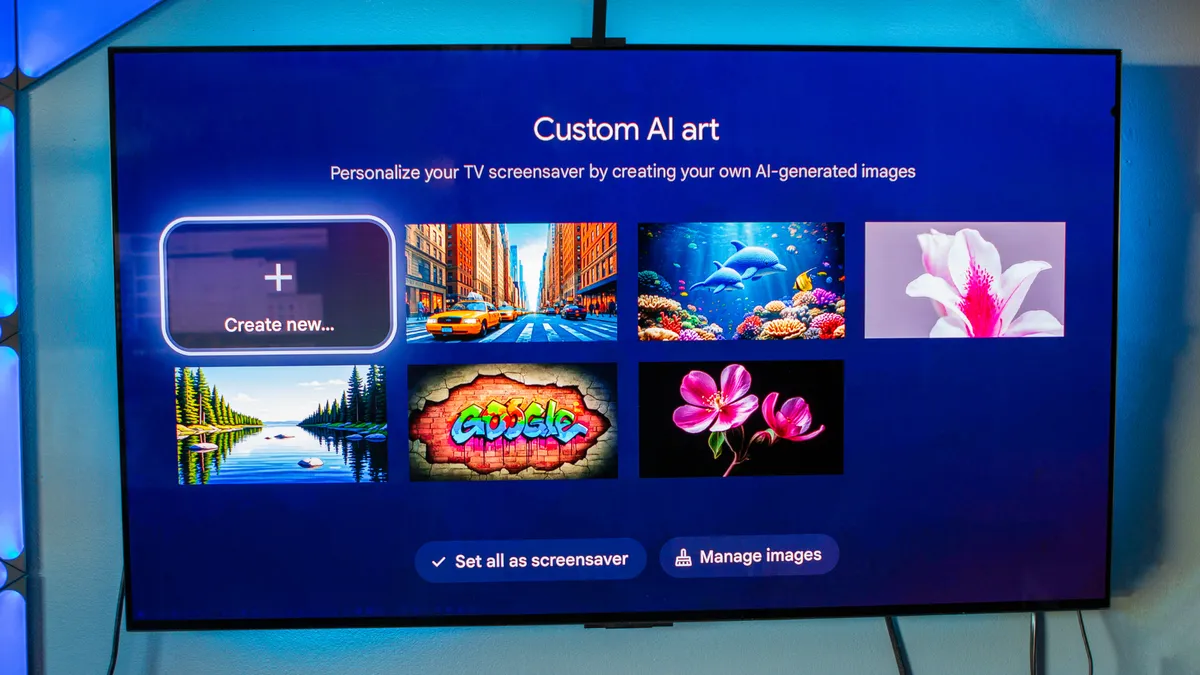
On the most basic level, you can send Gemini words (via text or speaking), images, video, or audio and have it generate information from it. You can have it generate an image from a description or tell you to summarize the contents of a book. We have a how-to guide for Gemini that'll help you get started.
Gemini is designed to make using other Google apps easier. It can "Ask Photos" to find specific memories, create YouTube Music playlists with certain prompts, summarize your Gmail inbox and craft auto-replies, or format Google docs into recipes, cover letters, vacation itineraries, and so on.
Gemini typically doesn't remember things you asked previously, but Google added a "Saved Info" feature that lets you avoid having to repeatedly share that you're interested in a specific topic or are allergic to a specific ingredient. The December 2024 Pixel Drop added this tool, as well as auto-transcribed screened calls and quick auto-replies and the ability to control Google Home smart tech through Gemini commands.

Gemini also has unique features targeted towards children and learning. We've already mentioned the AI Gems for older students, while younger kids can read AI-generated storybooks with drawings and text created via a text prompt.
Generally speaking, Gemini can assist with a wide range of situations. One of our writers used Gemini for interior design planning in his apartment, for example. More recently, Google and Samsung showcased Gemini screen automation. It uses agentic AI to complete smartphone actions for you, like ordering drink from Starbucks, without the user having to open the app.
Gemini uses a Personal Intelligence suite to make the experience tailored to your specific needs. It's built upon Personal context, a tool that uses past Gemini chats to create a personalized experience for future ones. Now, it can also account for specified instructions and data found in your Workspace apps for greater personalization.
Where is Google Gemini available?
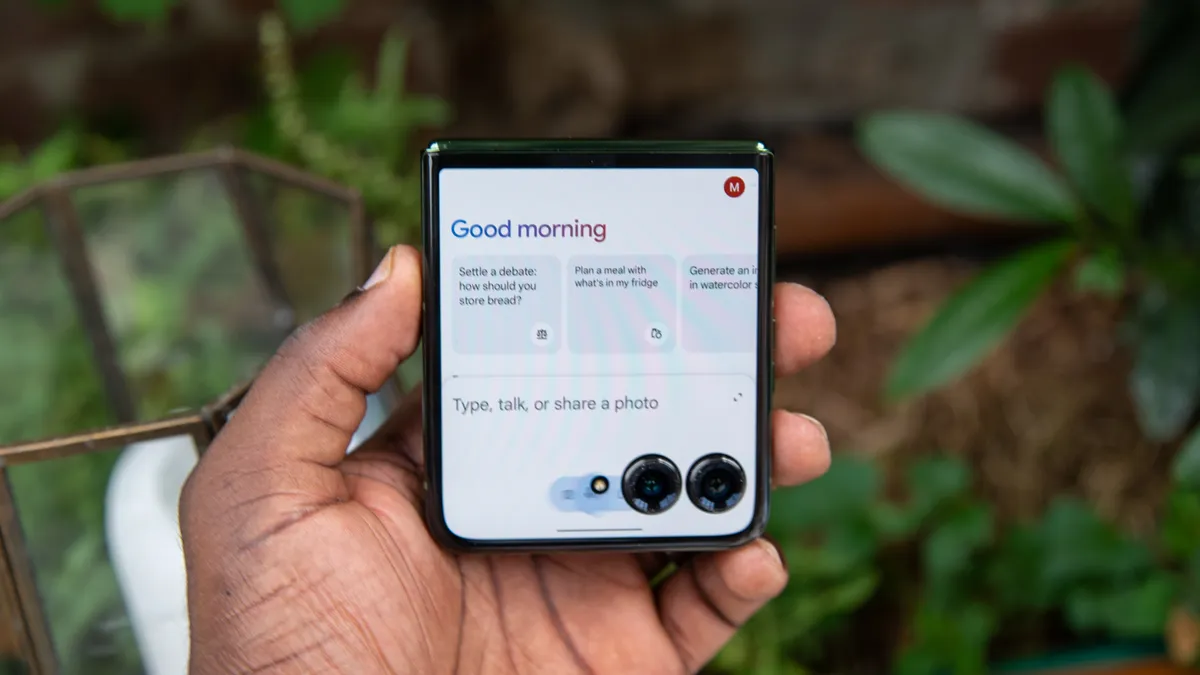
The standard version of the Google Gemini AI is "currently available in more than 40 languages and over 230 countries and territories," according to a Google Support page. The Gemini mobile app's Support availability page shows nearly the same number of languages, but only about 150 countries so far.
In either case, you need a legitimate Google account to access it. You must be at least 13 to own a personal Google account, but that may be as high as 18 in some countries, and some applications like Gemini Live require you to be 18 or older. Family Link or Google Workspace accounts may not be able to access it.
Go to gemini.google.com/app to access the generative AI on any web browser. Download the Android app or iOS app for the mobile version, including Gemini Live.
If you want Gemini to be able to pull information from other apps like Google Drive, Gmail, and YouTube, go to Gemini Extensions and toggle them on.
Google is slowly extending Gemini out to other devices that previously used Assistant. For example, the Google Home Public Preview has a "Gemini in Assistant" tool for Nest devices, and it'll be the backbone assistant for Android XR smart glasses and mixed-reality headsets.
Google AI subscriptions
By default, Gemini is free. You must pay for the most powerful versions, but it's only really worth it if you're using it for serious research, coding, and cutting-edge versions of Gemini like Mariner.
Google AI Pro, formerly known as Gemini Advanced and Google One AI Premium, is set behind a $19.99 Google One plan, though you can typically get a free trial of 1–2 months first, and college students who can prove enrollment will get free access to AI Pro. The plan also includes other Google one perks like 2GB of storage, unlimited Magic Editor saves, and premium Workspace tools.

Ultimately, your choice on whether to pay for Google AI Pro will depend on whether you use Gemini casually, professionally, or academically. You can get standard Gemini AI answers using the app without paying; AI Pro gives you more rigorous tools.
For those of you who need even more out of your AI experience, the Google AI Ultra plan may be for you. This plan starts at $99 per month, but it grants you access to all of Google's AI services, including early access to preview builds and new models, higher token limits, and other perks like YouTube Premium and 30TB of cloud storage. There's also Google AI Plus, a $9.99 per month option with AI tools and 200GB of cloud storage.
Where the name "Gemini" came from
Google called its AI "Bard" before rebranding it as "Gemini." Bard evoked Shakespeare and focused primarily on the LLM- and GenAI-focused side of AI, responding to your questions by painting a picture.
Gemini's Latin meaning is "twins," and it's famously a Zodiac constellation with pair stars. It's also the name of NASA's original moonshot program before the famous Apollo missions, with Gemini spacecraft having enough room for two.
According to a Google blog post, "How Google’s AI model Gemini got its name," the Gemini AI name stemmed from how two Google departments (DeepMind and the Google Research Brain team) joined forces for the project, and because "the monumental effort of training LLMs resonated with the spirit of launching rockets."
Aside from the fact that Gemini sounds more marketable and futuristic than Bard, the name is less restrictive because the AI isn't just a generative AI, but also performs other tasks.

