
When ChatGPT broke onto the scene a few years ago, Google's approach to AI was to put the technology in as many places as possible, hoping it would resonate with users. Initially, it didn't work — ChatGPT had better models, more use cases, and superior brand power.
Over the past year, there's been a strong sense that the tide is turning. Gemini is the only AI chatbot to consistently gain web traffic share over the past 12 months, chipping away at ChatGPT's major lead (via SimilarWeb on X). On top of that, Gemini 3 is here, and it's been so well-received by users that Google is taking creative steps to meet the outstanding demand.
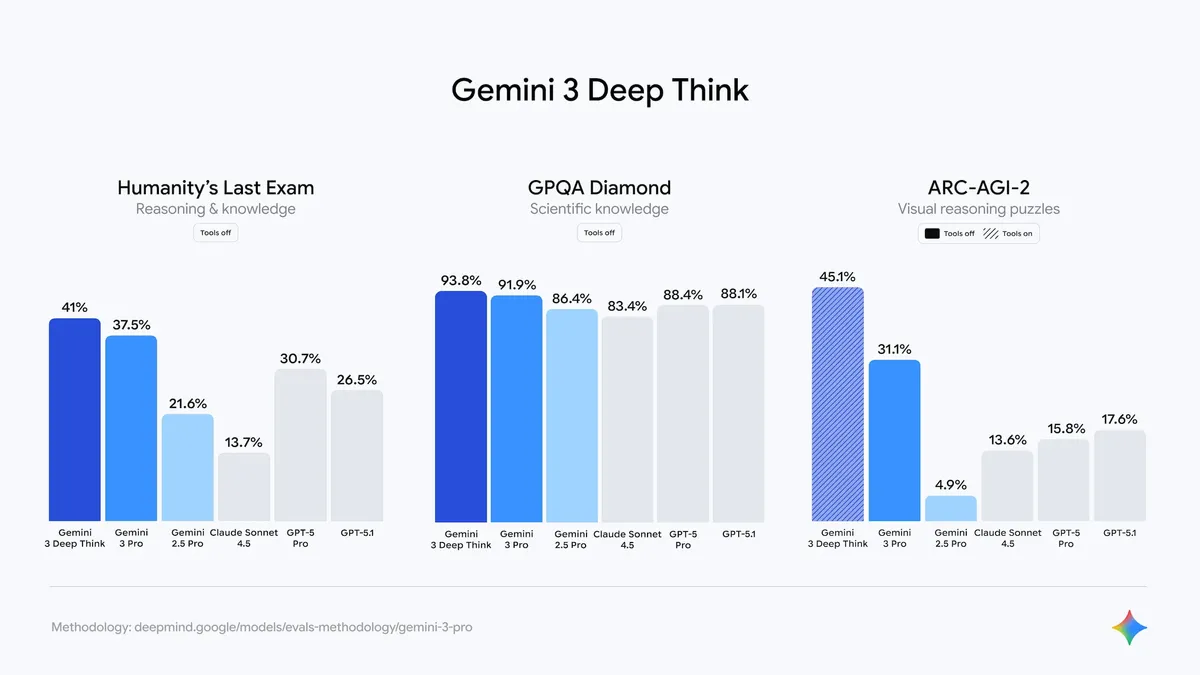
I'm bullish on Google's ability to outrun competitors like OpenAI, and frankly, it has little to do with Gemini 3's benchmarks or how well Nano Banana can generate images. Those factors are only a small part of what makes an AI suite successful. Instead, I'm getting the sense that Google finally gets it.
Enjoy our content? Make sure to set Android Central as a preferred source in Google Search, and find out why you should so that you can stay up-to-date on the latest news, reviews, features, and more.
Last month, I wrote that Google's Veo 3 model couldn't hold a candle to OpenAI's Sora 2 because the company didn't understand how much wrapping AI models in a user-friendly, brand-positive package mattered.
Since then, we've seen Gemini 3 and Nano Banana Pro debut, and Google has regained my trust. Google showed that it can consistently build great models, wrap them in engaging apps, and create catchy brands for its AI models. As a result, I'm a believer.
Gemini 3 shows Google can stay at the top

If we've learned anything over the years, it's that building one great AI model isn't enough for sustained success. OpenAI was once the only one with a quality large language model (LLM), and now its GPT-5.1 model sits outside the top five on the LMArena leaderboard. DeepSeek blew up in January 2025 and faded into obscurity again just as quickly when other companies caught up.
So, when Gemini 2.5 Pro dominated the LMArena and WebDev Arena leaderboards, I still needed to see more. Sure enough, Gemini 2.5 Pro was eventually unseated by models from xAI, Anthropic, and OpenAI. That's why Gemini 3 Pro's return to the top of the chart after Gemini 2.5 Pro was dethroned is a good sign of Google's consistency.




Gemini 3 Pro remains the top-ranked text model on the LMArena leaderboard. Google has the best model in the text, vision, text-to-image, image editing, search, text-to-video, and image-to-video categories. That's an outstanding showing — the only category Google doesn't lead is WebDev Arena. Gemini 3 Pro debuted in the top spot, but was bumped down to second place by Claude Opus 4.5.
Google's body of work now inspires a lot of confidence. It isn't just capable of making industry-leading models. It's also capable of consistently building new ones while facing threats from competing companies.
Google knows there's much more to AI than models

Another promising element of the Gemini 3 launch is the model's availability. It debuted immediately across the Gemini app, and AI Mode in Search, and Google's developer tools — including Google AI Studio and Vertex AI. It's the first time a new AI model has been available in Google Search, the company's flagship software product, on day one.
A model is only as good as its availability and user interfaces, and Google is telling us it understands that with the Gemini 3 rollout. It made multiple new ways to interact with Gemini 3 alongside the new model.


There's the Gemini Agent, an agentic platform that can take actions on your behalf within and beyond the Google ecosystem. AI Mode in Search added generative UIs, which are custom and interactive visuals created with Gemini 3 in real time. Most importantly, Google released a brand-new app with an agent-first integrated development environment (IDE) in Antigravity.
Finally, Google clearly gets that AI branding matters

OpenAI showed just how much branding matters in the AI race with Sora, the viral app for AI-generated videos. Seemingly overnight, the entire perception of AI videos changed. What once was called AI "slop" suddenly became fun and engaging. Google must have paid attention, because Nano Banana follows the exact same blueprint.
Nano Banana Pro is really the Gemini 3 Pro Image model, but the latter name isn't very fun, is it? Instead, Google gave this text-to-image model a quirky name and a banana emoji. I have no idea what Nano Banana means, or why there's a banana emoji plastered everywhere, including in Google Messages.

However, I do know what Nano Banana isn't. It's not named like a scary AI image-generation model. It's not branded like an enterprise or development tool. Nano Banana creates AI images for the everyday person, just like Sora did for videos.
Gemini already has a pretty strong brand, as it's a fixture on Android and Wear OS, and soon will have a stronger presence in Google Home and Android Auto. However, Google's generative image and video models easily fell into the "slop" category before Nano Banana made image models quirky and approachable.
Gemini 3 is a major turning point for Google's AI efforts

Gemini 3 couldn't have come at a better time for Google. The company needed to show it understood what truly makes a great AI ecosystem, and it did just that.
Gemini 3 Pro and Gemini 3 Pro Image demonstrate that Google can respond when challenged with new models from xAI, Anthropic, and OpenAI. New apps like Google Antigravity are proof that the company knows the way you interact with AI models is just as important as the models themselves. And crucially, Nano Banana is a strong signal that the Mountain View corp. finally grasps that brand power is social currency in the AI race.
Google's AI efforts are firing on all cylinders, and I can't wait to see what else it builds.

