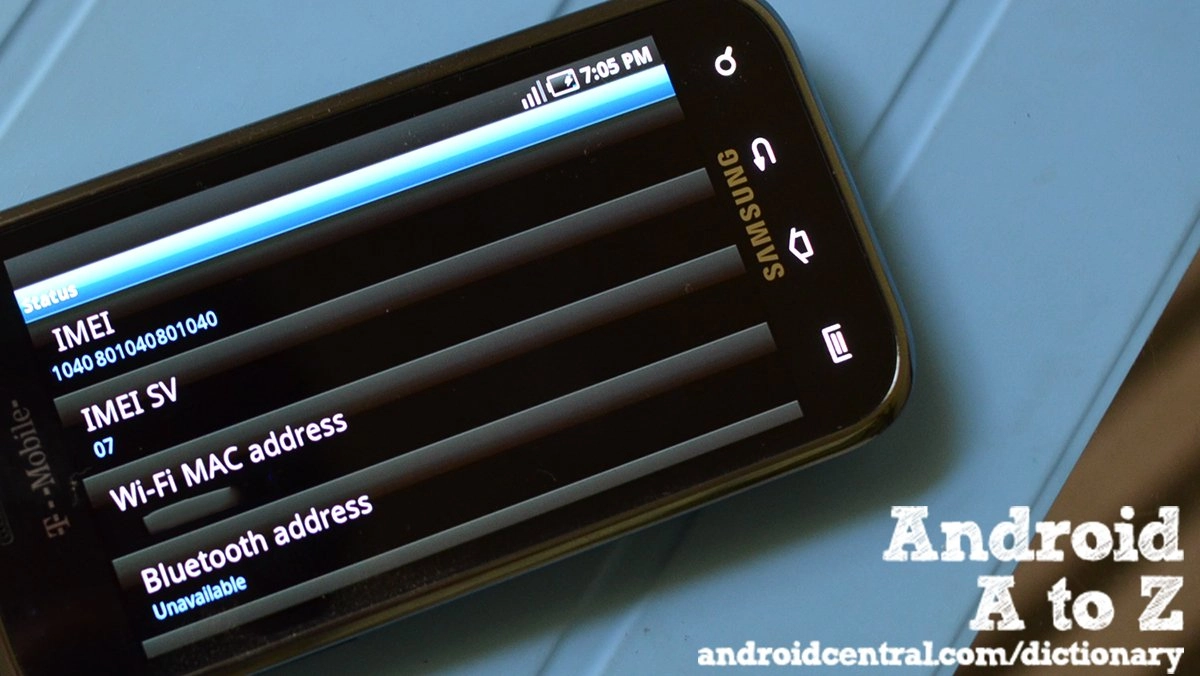
The IMEI (International Mobile Equipment Identity) number is a unique set of 15 digits used on GSM phones to identify them. Because the SIM card is associated with the user and can be swapped from phone to phone, a method is needed to keep track of the hardware itself, and that's why the IMEI was developed. Math nerds will enjoy the way they are calculated -- the first 14 digits are decided by the GSM association, and the final check digit is computed using what's called the Luhn Formula -- crazy base-8 math that mere mortals like most of us don't understand, nor want to understand. You can see the IMEI of your Android phone by looking in settings > About phone if you're curious. (Or on the box if you still have it. Or under the battery or on the phone itself.
What is this number used for? That's the real question, isn't it. Like the MEID number on CDMA phones (think Sprint and Verizon), the IMEI is used for network control. It's not very common, but your mobile operator can block a phone based on it's IMEI in cases where it's been reported stolen or someone didn't pay the bill. Because it's not easy to change the IMEI of your phone (and maybe even illegal -- check your local laws) it's also used to keep track of phones that were involved in criminal activity, and the UK in particular has a handy database of phones used for these purposes. The IMEI number is also used to specify a phone for wiretapping by federal governments worldwide.
On a lighter note, Android apps can also use your IMEI number. The app will declare that it has access to your personal information, and the IMEI can be used to keep track of the device in a remote database. This sounds pretty scary, but it's an easy way (though not necessarily the best way) for app developers to keep a settings database online for your phone, in their app. Let's say you mark a bunch of favorites in a wallpaper app. Those favorites are kept in a small database file online, and when you reconnect to the app it reads your IMEI number to find your preferences. Not an ideal method, but it's easy.

One last thing -- now that we know a little more about IMEI numbers, they will soon be changing to IMEISV numbers. The use-case scenarios are the same, but the data structure and method of calculation is different. An IMEISV gets rid of the check digit (and its complicated Luhn formulated calculation) in favor of two digits used for software version numbering. Like everything else in the mobile space, network identification changes rapidly.
Check out the complete Android Dictionary
More from the Android Dictionary
[block:views:article_lister_bespoke-block_13]

