

Android Central Labs is a weekly column devoted to deep dives, experiments, and a focused look into the tech you use. It covers phones, tablets, and everything in between.
OnePlus debuted the R series in the U.S. earlier this year with the OnePlus 13R, and now the OnePlus 15R makes its entrance at the tail-end with massive upgrades in tow. It's not only the first phone to sport the Qualcomm Snapdragon 8 Gen 5 processor, but also one of the few to feature a 165Hz refresh rate OLED. That, combined with the 3200Hz touch sampling rate, makes this a truly superb gaming phone.
Not only that, but the OnePlus 15R churns out top-tier brightness levels and excellent outdoor visibility, all without compromising on eye care features. It's the first OnePlus phone with a 3840Hz PWM dimming rate, helping make it the most eye-friendly OLED we've tested to date.
It's the premium OLED experience we didn't expect in a $699 phone, and it not only rivals phones twice its price in every regard but eclipses them in eye safety features. Read on to find out all the nitty-gritty details!
Eye comfort, brightness, and colors
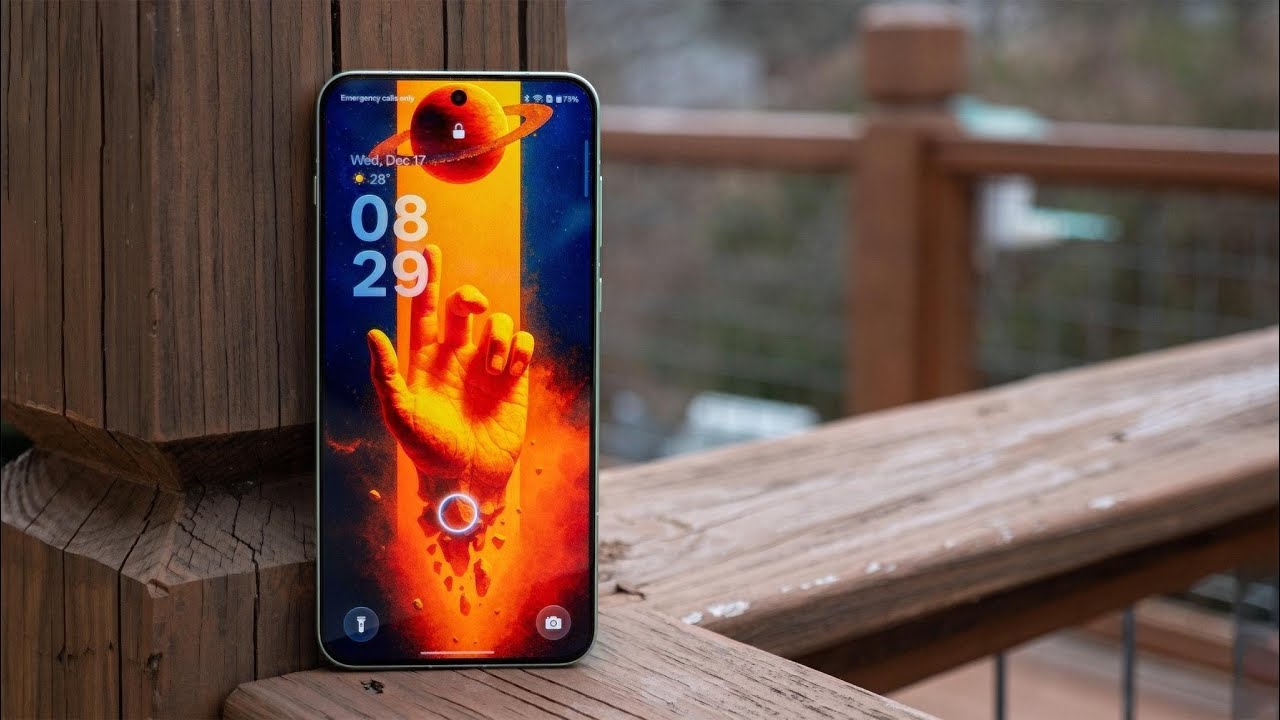
The OnePlus 15R's display represents the best of the best in OLED tech. It's extraordinarily bright when it needs to be, impressively dim in a dark room, and dims without flickering, unlike Samsung and Google Pixel phones. In fact, this phone sets a new bar for OLED flicker-free tech.
OLEDs differ from technologies like LCDs because each pixel emits its own light, producing beautiful contrast. But OLEDs have to adjust brightness on every frame, making them prone to flicker. Some phones use an additional PWM dimming layer on top of this, worsening the effect and making it impossible for some people to use them.
But the OnePlus 15R's display sets a new bar for flicker-free OLEDs. It sports the lowest modulation I've ever seen from an OLED. Modulation is the percentage difference between the brightest and dimmest points during the refresh cycle. Lower is always better. Phones like the Galaxy S25 Ultra and Pixel 10 Pro have 99% modulation, meaning they fully turn off before turning on again. The OnePlus 15R's brightness dip (modulation) is as low as 3.89%. That's not a typo, and it's a substantial advantage for OnePlus.

The OnePlus 15R uses DC dimming above 25% brightness and 3840Hz PWM dimming below that. Samsung and Google use a mere 480Hz rate, which has been shown to cause health issues in studies. Not only is 3840Hz well within the safe range deemed by the IEEE PAR 1789 standard, but it's also the fastest rate we've seen yet on a OnePlus phone.
To make things even better, the modulation rate during the PWM cycle is a record low of under 10%. I've never seen that on any phone, regardless of the price. It's a monumental win for OnePlus and the flicker-sensitive community, and great news for anyone who regularly uses this phone at low brightness.
It's also a true 10-bit panel, ensuring the phone doesn't use temporal dithering to fake colors and add yet another layer of flickering to the experience. Like PWM dimming, dithering can cause headaches, nausea, or other health issues.


Despite having so many great eye care features, the OnePlus 15R still gets plenty bright when it needs to. Sunlight visibility was as good as any other phone I've ever tested, including those twice the price (or more).
OnePlus doesn't use any anti-glare layer on the display, but while the glass won't reduce glare, the display itself is more than bright enough to offset the reflections. One of the comparison images above compares it to several other ultra-bright OLED phones. In contrast, the other two images compare it to two popular phones that use matte or anti-glare displays.
Gaming, refresh rate, and resolution

The OnePlus 15R's display uses the same horizontal resolution as the OnePlus 15 — a maximum of 1272 pixels at the "high" resolution setting. That's almost identical to even more expensive phones like the Honor Magic 8 Pro (1256 pixels), but slightly lower than some phones like the Galaxy S25 Ultra (1440 pixels). Regardless, this is a 450 ppi display, and it's unlikely you'll ever notice a difference, especially if you're using the high-resolution option.
The slightly lower resolution enables OnePlus to push 165Hz in a select few games, including popular shooters like Call of Duty Mobile, PUBG, and Battlegrounds Mobile India. Just select 165FPS from the game's settings menu, and you'll be blown away by how smooth things are. Here's the full list:
- Call of Duty Mobile
- Clash of Clans
- Brawl Stars
- Real Racing 3
- Standoff 2
- Blood Strike-FPS
- Battlegrounds Mobile India
- PUBG
To make things better, the phone features the same 3200Hz dedicated touch-response chip as the more expensive OnePlus 15. That means games feel notably more responsive, even if they don't support the 165Hz display refresh mode.
Since this uses the Qualcomm Snapdragon 8 Gen 5 processor, it has plenty of power to run games at that frame rate, too. By default, games that support 165Hz drop details a bit, but it's usually just down to medium, not low. I prefer resolution over frame rate any time, but 165Hz modes don't reduce resolution; they only increase object detail.
The OnePlus 15R uses an LTPS OLED panel that supports only a handful of refresh rates: 60Hz, 90Hz, 120Hz, 144Hz, and 165Hz. An LTPO display, like the one on the OnePlus 15, can dynamically adjust from 1 to 165Hz. LTPO certainly looks better on paper, but LTPS displays are generally better for people with flicker sensitivity. That's because the refresh rate mathematically aligns more closely with the dimming rate than on LTPO displays.
Verdict

I'm beyond impressed with the OLED display on the OnePlus 15R. It's not just the most flicker-free OLED I've ever tested; it also features the fastest refresh rate I've seen on a phone this side of a dedicated gaming phone (or a more expensive model like the OnePlus 15).
It does all that without sacrificing outdoor visibility or low-light comfort and gets closer to perfecting OLEDs as we know them. It's funny, because I was impressed by the OnePlus 15's display just a few weeks ago, and now the 15R — a $200 cheaper phone — matches those brightness metrics with even better eye comfort.
The OnePlus 15R is an LTPS display, which means the main refresh rates are 60Hz, 90Hz, 120Hz, 144Hz, and 165Hz. The OnePlus 15's LTPO display can drop as low as 1Hz, which could offer better power savings in some situations, but I'm not convinced this will make a difference for most people.
The OnePlus 15R also lacks the OnePlus 15's video enhancement modes, which can convert SDR content to HDR or even upscale lower-resolution content on the fly. While I don't care much about these two settings, they're notable and might be worth choosing the more expensive model if they're important to you.

The OnePlus 15R has one of the best OLED displays of all time, with a 165Hz refresh rate, excellent peak brightness and outdoor visibility, the lowest flicker rate of any OLED we've tested to date, and a true 10-bit panel without color dithering. It's a win for your eyes and your wallet!
FAQ
How bright is the OnePlus 15R display?
The OnePlus 15R display reaches a brightness of 1,800 nits in high-brightness mode. OnePlus has not disclosed the HDR brightness levels, but our tests indicate that it is comparable to the Galaxy S25 Ultra.
Which games support 165Hz mode on the OnePlus 15R display?
The games that support the 165Hz refresh rate on the OnePlus 15R display include: Call of Duty, Clash of Clans, Brawl Stars, Real Racing 3, Standoff 2, Blood Strike-FPS, Battlegrounds Mobile India, and PUBG.
How fast is the OnePlus 15R refresh rate?
The OnePlus 15R features a display refresh rate that ranges from 60Hz to 165Hz. Typically, the display switches between 60Hz, 90Hz, and 120Hz modes. Some games support 144Hz or 165Hz modes.
What is the PWM rate for the OnePlus 15R display?
The display supports 3840Hz PWM at low brightness levels, making it more comfortable than competing phones from Google, Samsung, and Apple.

