
The new iPhones are finally here. After months of leaks and rumors, Apple officially unveiled the iPhone 18 Pro series alongside its first-ever foldable smartphone, called the iPhone Duo, at its September 9, 2026, launch event.
The iPhone Duo marks Apple's first entry into the foldable phone market, though Android manufacturers have been selling foldable phones for nearly a decade.
And as is usually the case with a new iPhone launch, Apple has brought a bunch of features to its ecosystem that Android users might find pretty familiar. Here are some of the biggest iPhone Duo and iPhone 18 Pro features that Samsung or Google did first.
The iPhone Duo's passport-style design

The iPhone Duo isn't the first foldable phone we've seen, of course. Samsung has been experimenting with book-style foldables for years, while Apple is only just jumping on the bandwagon.
And if you think Apple's shorter and wider passport-style form factor is something new, that's not the case either. Google's first-generation Pixel Fold used a very similar approach, with a shorter and wider cover display that unfolded into a more tablet-like inner screen.
More recently, Samsung has adopted a similar form factor with the Galaxy Z Fold 8, while the Xiaomi 18 Fold we saw at IFA 2026 also follows the same wider design. So while the iPhone Duo might be Apple's first foldable, the form factor itself is anything but new.
Stylus support and hidden cameras
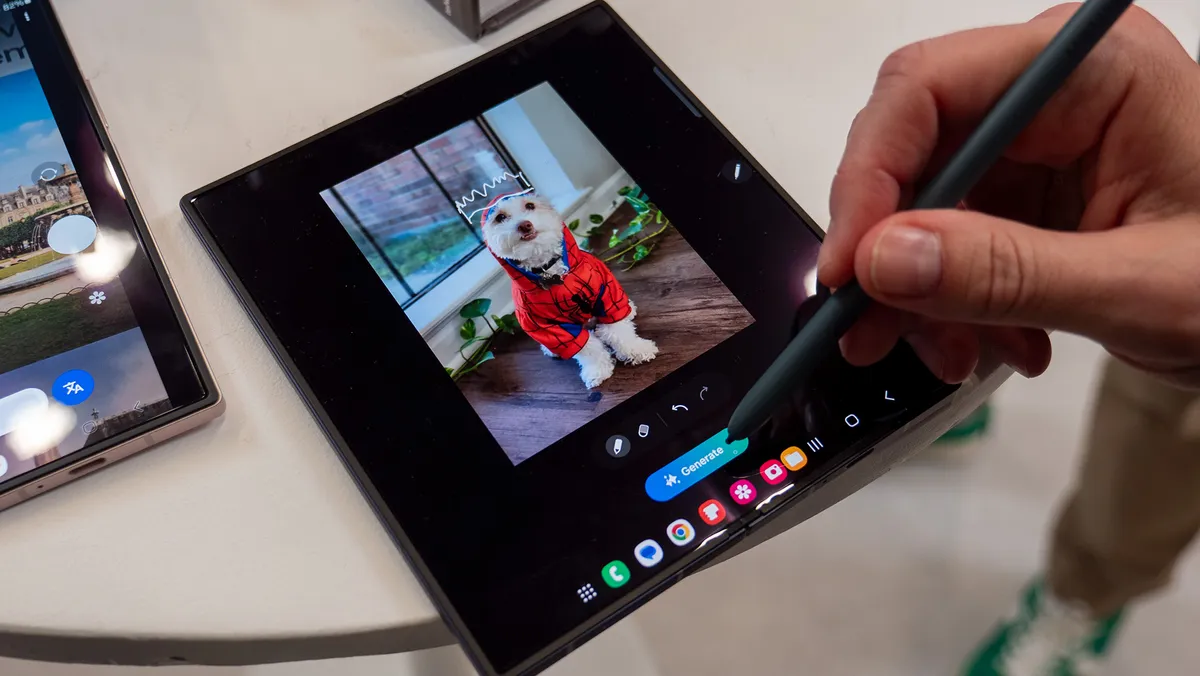
The iPhone Duo supports Apple Pencil on both the outer and inner displays, so you can use the stylus to jot down notes, draw, or mark things up on either screen. But this isn't the first time we've seen stylus support on a foldable phone.
Samsung offered S Pen support on its Galaxy Z Fold phones for years before eventually dropping it from its newer models. And even today, you can find other foldables with stylus support, including the Motorola Razr Fold.
Another feature Apple seems to have borrowed from Android foldables is the under-display camera on the inner screen. Samsung used an under-display camera on several generations of Galaxy Z Fold phones before finally dropping it with last year's Galaxy Z Fold 7. However, we're curious to see if Apple's implementation is any better.
Samsung beat Apple to the anti-reflective inner display

Apple's iPhone Duo comes with a 7.6-inch inner display, and one thing Apple talked at length about is its specialized matte nano-texture finish, which, in simpler terms, is an anti-reflective coating.
The inner display on any foldable phone can be quite reflective because of the materials used to make the screen flexible. Adding an anti-reflective coating should reduce those reflections and make things like watching videos or reading content much easier in bright light.
But again, we're not seeing this for the first time. Samsung's Galaxy Z Fold 8, which launched earlier this year, also features an anti-reflective coating on its inner display. Apple's implementation may turn out to be better or more advanced, and we'll have to put both phones side by side to know for sure. But the idea of reducing reflections on a foldable's inner display is great, though certainly isn't new.
Samsung has been doing Flex Mode for years

Unlike the regular Galaxy Z Fold 8, which either stays fully open or snaps shut, the iPhone Duo's hinge can hold the phone open at different angles. This means you can partially fold the iPhone Duo and prop it up to take photos with the rear cameras or just watch videos on one half of the display.
It sounds great, but again, Apple isn't the first to do this. Samsung offers similar functionality on the Galaxy Z Fold 8 Ultra with Flex Mode and has offered it on previous generations of Galaxy Z Fold phones as well. Samsung has even optimized several apps to take advantage of the partially folded position, so this is another area where Apple is following an idea we've already seen on Android foldables.
The iPhone finally gets proper manual camera controls

Switching our focus (pun intended) to the iPhone 18 Pro models, another new feature this year is what Apple calls "Pro Controls," which essentially brings proper manual camera controls to the iPhone for the first time.
You can now manually adjust things like aperture, shutter speed, white balance, and other camera settings instead of relying entirely on Apple's automatic processing. It shifts the iPhone from being primarily a point-and-shoot camera to giving serious photographers much more control over the final image.
But again, this isn't exactly new. Pro and manual camera modes have been available on Android flagships for years, with phones from Samsung and other manufacturers already letting users manually adjust these settings.
Split screen, App Pairs, Dual View, and more

Finally, the iPhone Duo and iPhone 18 Pro offer plenty of software features we've previously seen on Android smartphones.
The iPhone Duo, for example, finally brings proper split-screen multitasking, letting you run two apps side by side on the larger inner display. You can also save two apps together as an App Pair and quickly relaunch them in split screen later.
There's also Dual View, where the cover display can act as a viewfinder for the person you're photographing while you're using the rear cameras. Again, these are useful additions, but they're features Motorola and other Android foldable makers have offered in some form for years.
So while Apple's implementation might be different or more polished in certain areas, quite a few of the iPhone Duo's headline software features will feel very familiar if you've used an Android foldable before.
And if you haven't used one before, we have a handy guide on why you should buy a foldable and what you can expect.

