
With the recent launch of the new Fitbit Air and the presumed Pixel Watch 5 later this year, the 2026 is shaping up to be a great year for Fitbit fans. Google even came up with a new Gemini-powered Fitbit health coach and app redesign for all of its new Fitbit hardware. Fitbit Premium is now Google Health Premium, and access to the Google Health Coach is included in it.The good news is that lots of amazing Fitbit devices are available for really low prices, including the budget-friendly Fitbit Air which only just debuted.
Google tends to prioritize its Pixel Watch series above Fitbit hardware, pushing the newest sensors, enhanced algorithms, better GPS accuracy, and health tools like Loss of Pulse onto the Pixel Watch 4 and Watch 3. Android phone owners may find that these are the best Fitbits available, even if "Fitbit" isn't in the name.
On the other hand, Fitbit-branded devices like the Charge 6 and Sense 2 last significantly longer per charge, are more comfortable for sleep tracking, and have received some new features in recent years, such as Cardio & Target Load and a new sleep algorithm. Plus, they're more affordable and work with either Android or iOS.
This guide will run through all of the best Fitbit hardware options! So if you're preparing to tackle some fitness-focused New Year's resolutions, now's a good time to pick one.
At a glance

Best overall
The best Fitbit isn't called a Fitbit, but the Pixel Watch 4 is Google's flagship with the best fitness experience available for the brand, with dual-frequency GPS, custom run workouts, and more.

Best Fitbit tracker
You want a "real" Fitbit with proper battery life, not a bulky smartwatch. The Charge 6 does have Google app support, as well as tons of health sensors and six-day battery life.

Best Fitbit watch
It's a petite, comfortable watch with 6-day battery life and an excellent range of health data. The Sense 2 is not as smart as the Pixel Watch 4, but it does have Google Maps and Wallet support.

Best midrange
Versatile and stylish, the Fitbit Versa 4 features a vibrant AMOLED display, solid battery life, Google Maps, and Google Wallet, but lacks the Sense 2's sensors or a Pixel Watch's smarts.

Best on a budget
Retailing for $99, the screen-less Fitbit Air offers a week-long battery life, employs a compact, lightweight design, and tracks your sleep, health, and fitness.

Best for kids
If you want a Fitbit for your youngster, the Ace LTE is the perfect choice, complete with a durable, kid-friendly design, activity tracking capabilities, even games. Most notably, it comes with LTE connectivity so they can call or message without a phone.
Best overall

The Pixel Watch 4 isn't a traditional Fitbit, given its Wear OS capabilities and relatively short battery life. Even if you ignore perks like Gemini, though, the Watch 4 is the "best Fitbit" simply because Google prioritized upgrading it with new Fitbit features that never came to older models due to their hardware limitations. For example, only the Watch 4 (and Watch 3) have on-wrist run workout guidance, running form analysis, and an upgraded HR algorithm.
The Watch 4 has a 3,000-nit display perfect for outdoor visibility, and while its overall battery life is short, our Watch 4 battery test proved it can handle more GPS hours than a Sense 2 or Charge 6 (8–10 hours vs. 5 hours), as well as music streaming capabilities instead of just YouTube Music playback controls.
For fitness tracking, our Pixel Watch 4 fitness test showed how reliable its new dual-band GPS accuracy is, while its revamped heart rate algorithm is good enough for casual athletes to rely on. And in emergencies, you get safety tools like Emergency SOS, fall detection, and satellite SOS that aren't available on any other Fitbit.
Basically, you won't find any exclusive Fitbit features that aren't on the Pixel Watch 4. And it blows Fitbit hardware out of the water for smarts, particularly for Google apps like Gemini, Gmail, Calendar, Maps, and Home. You do get basic Maps turn-by-turn navigation and Wallet payments on other recent Fitbits, but that's it.
You'll have to accept that it only lasts about one and a half to two days per charge and that it's slightly heavier than most Fitbits, but the Pixel Watch 4 is a reliable workout companion. You can also choose the Pixel Watch 3 for a lower price if you can accept some downgrades to GPS accuracy and battery life.
Best Fitbit tracker

Let's put aside the Pixel Watch 4 and focus on true Fitbit-branded products that work with both iOS and Android. Now, the question really becomes this: should you buy a fitness tracker or smartwatch? The Sense 2 and Versa 4 give you a mic and speaker, plus a more conveniently large AMOLED display to swipe through data and apps. Despite that, we'll still point you towards the Charge 6 first.
The Charge 6 has all-day heart rate and sleep tracking, built-in GPS tracking instead of connected GPS, NFC for tap-to-pay transactions, and automatic workout detection. All of this, along with the petite 1-inch AMOLED touch display, is virtually unchanged from the Charge 5; even the bands are interchangeable.
So what's new? The biggest change is the focus on Google: the Charge 6 has a basic Maps function to point you towards your destination, Google Wallet, and YouTube Music playback controls (though no other streaming service is supported, frustratingly). Google also borrowed some AI tricks from the Pixel Watch series to make the heart rate monitor "60% more accurate readings during vigorous activities like HIIT, spinning, and rowing."
Beyond that, the Charge 6 has a capacitive button that lets you activate the display, go back to the main watch face, or swap between data during a workout. Compared to the finicky capacitive buttons on the Versa 3 and Sense, the Charge 6's button is much more reliable. In our Fitbit Charge 6 review, we noted that the button "works as it should, without being prone to accidental presses like a physical button," and that it's much more convenient than having to always double-tap the Charge 5 display to activate it.
Overall, we called the Fitbit Charge 6 the best fitness tracker across brands for a reason. It's comfortable to wear and has tricks that no other petite band offers. For sleep tracking, it's not as comfortable as the Fitbit Air, but it's a close second and gives you a much more functional display. Generally speaking, this is the true Fitbit we'd recommend first if you're okay with a thinner screen.
Best Fitbit watch

The Fitbit Sense 2 packs an impressive number of health sensors, including skin temperature and blood oxygen to determine the quality of your sleep, a cEDA sensor to continuously track your stress levels, and an ECG and heart rate monitor to actively and passively check for atrial fibrillation.
It displays all of this information in an easily accessible manner, either on the watch directly or from the Fitbit app on your phone. Fitbit and Google worked together to improve the user interface, bringing some of the UI design elements from Wear OS to the Fitbit OS. You also get a proper button instead of the original Sense's finicky capacitive button, though no crown controls.
Compared to the original Sense, you've lost music playback controls, limited third-party apps, Wi-Fi downloads, and Google Assistant support; you'll have to settle for Bluetooth and Alexa commands. At least you get Google Wallet, Google Maps, and YouTube Music, but these are available on cheaper Fitbits; the Sense 2 is pricey enough that you might reasonably expect more smarts, like what you'd get on an Amazfit watch.
Compared to the Charge 6, it costs twice as much and has comparable battery life, but you'll appreciate the larger display and built-in mic and speaker for Bluetooth calls. Match it up against the Pixel Watch 4, and it's much thicker. That costs $150 more — and the Sense 2 is frequently discounted — but it has a wider range of Google apps, Gemini, and a laundry list of other smarts. But if you own an iPhone or want more than two days of battery life, the Sense 2 is a no-brainer.
Best midrange
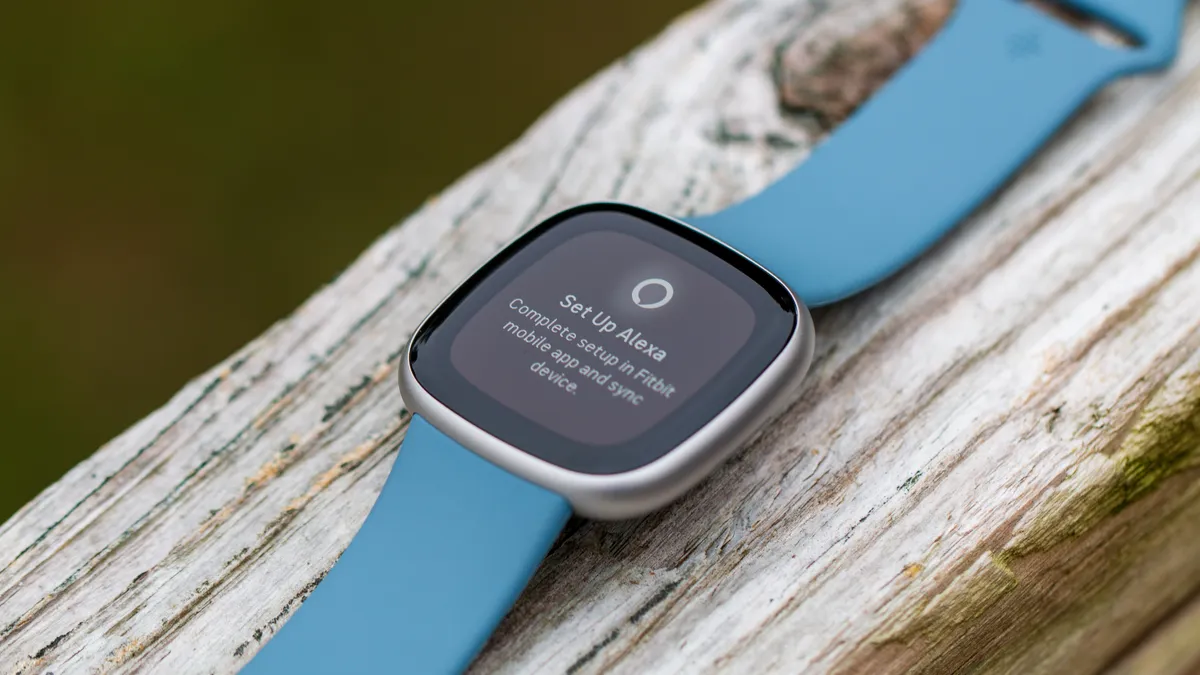
The Fitbit Versa 4 is the most basic, streamlined watch in the lineup. It has the same design, display, button, and band as the Sense 2, but without the cEDA sensor for stress data, ECG for AFib detection, skin temperature for sleep insights, altimeter for elevation data, or gyroscope for more accurate step and workout tracking.
Despite that, you're still getting the same HR sensor for workouts, sleep analysis, high/low HR warnings, and irregular heart rhythm detection, along with blood oxygen data. For anyone trying to save money, that'll give you more than enough data without the bells and whistles; for anyone who wants Fitbit to have the most data possible to judge your health, it won't be enough.
The Versa 4 has the same Wear OS-esque UI and three Google apps, along with the mic & speaker for calling and Alexa commands; it also had its last-gen support for Google Assistant, Wi-Fi, music controls, and other smarts removed. Because the Versa 4 costs less, you might be more willing to accept the limited smarts compared to the pricier Sense 2.
Ultimately, the Versa 4 is an attractive, lightweight, and affordable shell for Fitbit Premium and heart rate tracking, around the same price as the Charge 6 if you prefer a larger display but don't need the bells and whistles.
Best on a budget

If you like the idea of the Charge 6, but it's still too rich for your blood, take a look at the Fitbit Air. Not only is this the most affordable Fitbit you can buy, it's also the lightest. It's so light that you might forget you're wearing the thing!
That small size means you miss out on the built-in GPS and there's no display either. However, it works just fine if you run with your phone and can rely on connected GPS. This is easily the best Fitbit for budget shoppers who want a wide array of features at an affordable price.
Outside of the missing GPS, the Fitbit Air comes with Fitbit's essentials. It tracks your all-day activity and sleep and automatically detects exercises. Live heart-rate monitoring is included, too, as is a three-month membership to Google Health Premium at no added cost! Combine all of that with up to 7 days of battery on a single charge, and you end up with a really capable tracker.
As wonderful as the Fitbit Air is, it is missing a few key health sensors from the upper-tier Fitbits, like ECG or cEDA, and its heart rate sensor isn't as accurate as the one found on the Pixel Watch 4. However, the screen-less, featherweight design paired with features like Smart Wake make it a fantastic budget fitness wearable overall.
Best for kids
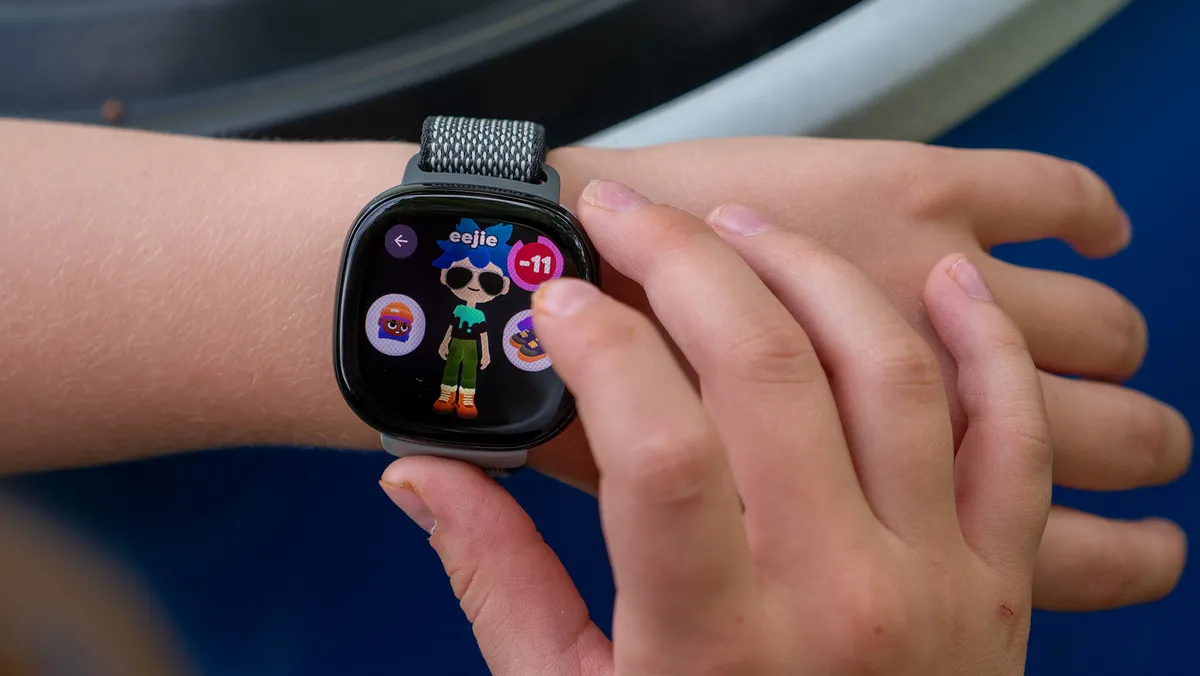
Living a healthy lifestyle is just as crucial for your kids as it is for you. So, Fitbit has a tracker specifically for kids with the Fitbit Ace LTE. But it's also for parents since it comes with a subscription and 4G LTE connectivity so kids can keep in touch with the parental units and vice versa.
Instead of getting a younger child a cell phone, consider this smartwatch that allows them to send and receive calls and messages to and from up to 20 approved contacts. It also offers 24/7 GPS tracking so parents can keep an eye on location.
From a fitness perspective, kids can track physical activity and receive rewards for their movement. This includes items in 3D interactive games that can be played right on the wrist (don't worry, you can disable these during school hours) along with an adorable Eejie character that's like a 21st Century version of the Tamagotchi. Kids can keep on top of progress through their own activity ring design called a Noodle.
The only thing missing from this smartwatch is sleep tracking, presumably because of battery life: since it's a connected watch, it only lasts for about 16 hours, which means your little ones will need to recharge overnight and slap it back onto the wrist in the morning. This smartwatch also requires a Fitbit Ace Pass subscription. If you want something without connectivity, you can alternatively consider the Fitbit Ace 3, which has tons of great features for kids, too. Or, look into the best kids smartwatches for other functionality like on-wrist phone calls or geofencing.
FAQ
Which Fitbit should you buy?
Why you can trust Android Central Our expert reviewers spend hours testing and comparing products and services so you can choose the best for you. Find out more about how we test.
There isn't a perfect Fitbit watch. Each Fitbit-branded device has strengths — affordability, comfort, compatibility with iOS and Android, and app insights — and weaknesses — limited smarts, older hardware, and the $10/month subscription for insights after the free six-month or three-month trial of Google Health Premium. The Pixel Watch 4 easily has the best hardware, but its battery-guzzling hardware and Android restriction will turn off plenty of Fitbit veterans.
So, how do you choose the best Fitbit for you? For starters, decide what you plan to use it for. If it's mainly for health and sleep insights, an Fitbit Air or Charge 6 will be more comfortable for sleep tracking and general use, and will cost you less than a full-blown watch. But the Fitbit Air is screen-less whereas the Fitbit Charge 6 lacks a large, bright display suited for reading notifications easily.
The Pixel Watch 4 is the only proper smartwatch available. A Sense 2 does give you Bluetooth calling and a couple of apps, but no app ecosystem, music storage, or assistant.
For younger kids who don't have a smartphone yet, the Fitbit Ace LTE is a great choice to stay connected with them and offer some motivation to stay healthy. For older kids, though, any Fitbit will be about the same; they may prefer something smarter or more stylish, but it depends on the person.
Which new Fitbit devices will we see in 2026?
Following hints from Google and Fitbit representatives, the Fitbit Air made its debut on May 26, 2026. The screen-free fitness wearable can be used alone or alongside the Pixel Watch 4. It offers a more non-intrusive option with a week-long battery life and robust water-proofing.
As fall approaches, we are expecting to hear more rumors about the Pixel Watch 5, which will surely be the main fitness watch option of 2026. Since the Pixel Watch 4 came out in October 2025, we're expecting the Watch 5 to follow the same pattern and come out in October 2026.
Do you need to pay for Google Health Premium (formerly Fitbit Premium) to use a Fitbit?
Once your three-month or six-month free Premium trial ends, you'll still see a Daily Readiness score, activity goals in the Today tab, Active Zone Minutes, sleep and stress scores, Cardio Load, and health metric trends for sleep stats like blood oxygen, breathing, and HRV.
Paying for Google Health Premium (formerly Fitbit Premium) nets you workout videos, detailed breakdowns of your sleep and stress data, monthly data analysis, curated recipes, AI run recommendations, Target Load, and more. Now that the new Google Health Coach has launched, Premium members get access to this AI-powered coaching feature as well.
Essentially, no, you can use Fitbit devices without paying for Premium, as long as you're okay with analyzing your own data trends and figuring out your own training regimen.

