When you purchase one of the best Android phones under $400 today, you can expect a well-rounded smartphone that doesn't have a lot of compromises. Thanks to the continued improvements in mobile technology, modern-day mid-range devices include premium features such as dust and water proofing, multi-band 5G support, powerful hardware, superb designs, and fast charging. Manufacturers are also doubling down on software support, with some devices being on par with flagships costing twice or thrice as much in this department.
When it comes to reasonably priced smartphones, our top vote goes to the CMF Phone 2 Pro. It's not just available at a great price, but also comes with a quirky design and feature-laden software experience. You can also consider the Samsung Galaxy A36, which packs almost all the essentials, even if it doesn't do particularly well when it comes to resource-intensive workloads. There are many other Android phones worth considering too, and we have listed some of the finest picks here.
At a glance

Best overall
When you sign up for the Nothing US beta program, you can get your hands on a phone that should cost $400 but costs $280. The phone has a bright display, speedy performance, great camera tech, and a design that you can upgrade at home.

Best software
The Galaxy A36 has a large AMOLED display with a 120Hz refresh rate and an IP67 rating. It gets up to six Android OS upgrades, and supports a sub-set of Galaxy AI features available in the premium models.

Best value
The Moto G Power 2026 offers amazing value at $399 since it is IP69 rated for the highest level of waterproofing. Plus, you get a bigger battery, 32MP selfie camera, and Android 16 when compared to the 2025 model.

Best with a stylus
The Moto G Stylus 2025 costs the same as the previous model but comes with an IP68 rating and MIL-STD-810H certification, a brighter pOLED screen, and faster 68W wired charging.

Best battery life
The Samsung Galaxy A17 5G is a solid budget pick if you're looking for top-notch battery endurance. It has a 5,000mAh battery, a Exynos 1330 SoC, and up to 25W wired charging support.

Best international
The Nothing Phone 3a is a remarkable and attractive device for budget shoppers. It improves on its popular predecessor by offering a telephoto camera, a cooler design, and a better chipset.
Best overall

Cheap phones are all about compromises, but the CMF Phone 2 Pro by Nothing barely has any. It offers specs you'd expect from a mid-ranger like the Pixel 10a for hundreds of dollars less. The well-rounded smartphone packs in a 6.77-inch FHD screen that hits 1,300 nits of brightness, whereas some of our other top picks tap out at 1,000 nits. Nothing has also added a big 5,000mAh battery and a strong 50MP primary sensor.
For photography, you get a smartphone that takes quick shots with high-quality results, especially for portraits and selfies. Nothing went a step further and added a third telephoto camera as well, allowing you to take higher-quality zoom shots.
Just like the last-generation Phone 1's quirky design, the Phone 2 Pro takes a bit of a different approach when it comes to customization. Instead of a detachable back cover, there's a universal case that snaps on to the back and lets you attach a bunch of accessories attach to it. You can opt for a folding stand, special lenses for the cameras, and even a lanyard cable.
Best software
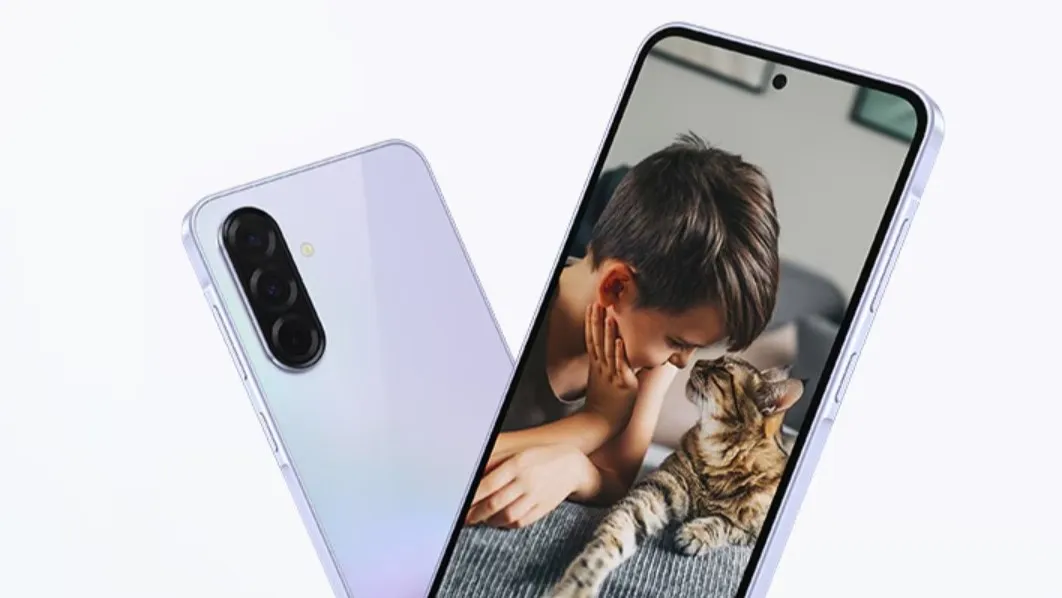
With a solid Qualcomm Snapdragon 6 Gen 3 SoC and 6GB of RAM, the Samsung Galaxy A36 is an affordable yet still decently powerful entry-level smartphone in the Galaxy series. Although it has now been superseded by the Galaxy A37, but the improvements in the newer model are marginal at best. The Galaxy A36 has a 6.7-inch Super AMOLED panel with a 1080 x 2,340 resolution, a 120Hz refresh rate, and up to 1,900 nits of peak brightness. The display is secured by Gorilla Glass Victus Plus and the phone even comes with an IP67 rating for dust and water resistance, so you don't need to worry if it gets wet.
The Samsung Galaxy A36 features a tweaked design, bringing back the singular pill layout for the rear cameras. You also get Gorilla Glass Victus Plus for the back panel, which is great to see.
The camera setup includes a 50MP primary sensor, 8MP ultrawide, and a 5MP macro camera. As such, you should consider it a dual-lens camera setup only. The battery is large at 5,000mAh and Samsung has finally given the A series 45W fast charging with a compatible wired charger.
The Samsung Galaxy A36 runs One UI 7 (Android 15) and will get six generations of OS upgrades and six years of security patches. Samsung is also bringing some of its Galaxy AI features to the A36, calling it Awesome Intelligence. This includes a few features from Galaxy AI like Circle to Search. It's a pared down version but impressive that you get AI in a sub-$400 phone at all. Moreover, since it's not the newest thing in town anymore, you can buy the Galaxy A36 at an even better price.
Keep an eye out for the Galaxy A37 which has hit the market and at times, can be found for below $400. It's basically the A36 but with an IP68 rating, Android 16 out of the box, and is powered by an Exynos chip.
Best value

The 2026 edition of the Moto G Power arrived a bit earlier than expected and to no one's surprise, it's just a minor update over the 2025 version that you can still buy. Coming in at a higher price, the Moto G Power 2026 gets new colors, better scratch protection for the display, a slightly bigger battery, and a 32MP selfie camera. But that's just about it, as the rest of the features and specs are identical to the Moto G Power 2025.
The Moto G Power 2026 is still a great package at $399, as Motorola's tried and tested design looks nice and the faux-leather back is easy to maintain. The new Pantone colors — Evening Blue and Pure Cashmere — look really nice too. The new Moto G Power has the same level of waterproofing and toughness with an IP69 and MIL-STD-810H certifications. The large display gets upgraded Corning Gorilla Glass 7i for stronger shatter protection.
The one big change or rather drawback with the Moto G Power 2026 is the lack of wireless charging. Motorola removed this feature (which was available in the last-gen model) to keep the weight low. If this is important to you then you could very well get the older model while stocks are available as you won't be missing much compared to the new one.
Best with a stylus

Majority of the smartphones from Motorola offer incredible value, and the brand has hit a home run once again with the Moto G Stylus 2025. Although it generally costs just a penny shy of $400, you can get the device for much less during sales and festive season promotions.
So, what exactly is it that makes the Moto G Stylus 2025 a fantastic package? The new model follows the same design as the other 2025 Moto G series devices, with four circular cutouts in the rear camera island, despite having two real cameras. The phone is now IP68 rated for dust and water resistance, along with being MIL-STD-810H certified, so it's much more durable than what you'd expect from an entry-level device.
The display on the Moto G Stylus 2025 can hit up to 3,000 nits of peak brightness, which is incredible. It's a 6.7-inch pOLED panel with a Full HD resolution, but only Corning Gorilla Glass 3 protection. It's powered by the Qualcomm Snapdragon 8 Gen 3 chipset, which runs decently quick. There's a 50MP main camera, a 13MP ultrawide, and a 32MP selfie camera. Finally, you get a big 5,000mAh battery with fast 68W charging and 15W wireless charging support.
Best battery life

Another phone worth considering on a budget is the Samsung Galaxy A17 5G. The successor to the Galaxy A16 5G, the A17 launched at the start of 2026 and features minor upgrades like a slimmer and lighter deisgn, and a switch to the Exynos 1330 chip.
The Galaxy A17 5G supports up to 25W wired charging, but no wireless charging. This smartphone has a respectable IP54 certification and a good 6.7-inch Super AMOLED display, but it doesn't support HDR video and comes with a waterdrop notch that looks extremely dated at this point. The Galaxy A16 5G has thin bezels and 128GB of storage that is expandable through microSD. You get a taste of flagship phones with One UI 8.5 on top of Android 15, and the phone will get up to six years of OS and security updates.
The Samsung Galaxy A17 5G also features a 50MP wide-angle, 5MP ultrawide, and 2MP macro camera. Selfie lovers will also appreciate the 13MP selfie camera. You won't find the latest features available on the higher-end models, but this phone covers the basics and won't break the bank.
Best international

The Nothing Phone 3a takes everything that was great about its predecessor and makes it better. For starters, you now get better dust proofing, thanks to the IP64 rating. There's also the addition of a third 50MP telephoto camera on the back. A useful Essential Key on the side can be used to access a special menu of curated AI apps. Yes, this phone even gives you access to a limited selection of AI features.
It's one of the best-looking phones in its class with a transparent back panel and Glyph lights that Nothing's smartphones are renowned for. Nothing switched to a Qualcomm chipset for this one, but the Snapdragon 7s Gen 3's performance is slightly worse than the MediaTek SoC on the Phone 2a, so keep that in mind. This is mostly noticeable during gaming, but daily usage should still be fine. It's worth mentioning here that the Nothing Phone 4a is now available, but that model is a bit expensive and not available (yet) as part of the U.S. beta program.
Speaking of availability in the United States, that's arguably the biggest letdown with this smartphone. But if you can find a way to get it, it's hands down among the most value-packed phones in its segment.
Honorable mentions & international phones
Unfortunately, you won't find some of the best Android phones under $400 in all regions. Some phones sell out fairly quickly, leaving only third-party resellers that repackage used phones without telling you.
If the picks above don't work for you, for whatever reasons, we're also including a few other affordable picks below that we've reviewed and liked for both U.S. and international buyers. They hit that low-to-midrange price window, whether or not you're paying in dollars, rupees, or any other currency.

Ticks all the right boxes
As noted by Android Harish Jonnalagadda in his POCO X7 Pro review, this is a phone that redefines the budget segment. You get a MediaTek Dimensity 8400 Ultra chipset, up to 12GB of LPDDR5X RAM, up to 512GB of UFS 4.0 storage, fast 90W wired charging, and a big battery that can go all day. The POCO X7 Pro also looks as good as it works, and is easily one of the best overall phones that you can get under $400, provided it's available in the region that you live in.

Great if you can find one
Our TECNO Camon 30 Premier 5G review noted that this phone is hard to find in the U.S., even more so since it's a bit dated at this point. Still, it costs around $350 (converted) for anyone in Africa, the Middle East, Latin America, or Southeast Asia. The phone features a 6.8-inch 1264 x 2780 LTPO AMOLED panel, a MediaTek Dimensity 8200 Ultimate chipset paired with 12GB of RAM and four 50MP lenses, including a telephoto. The phone gives you "flagship killer" specs in an affordable device. There are a couple of weaknesses with the software, but the phone's raw hardware is nearly unmatched.

Looks even better than it works
Featuring a stunning design, the Infinix Note 50 Pro Plus is a smartphone that looks far more premium than it actually is. The budget smartphone packs solid hardware specifications, superb cameras, a 6.78-inch AMOLED panel, and more. You also get a 5,200mAh battery that can easily go a full day with moderate to heavy usage. The software experience and update policy could be a bit better, but the affordable pricing more than makes up for it.

Two solid mid-rangers
Our Senior Asia Editor Harish Jonnalagadda gave the same ranking to the Redmi Note 13 Pro and the Redmi Note 13 Pro Plus in his reviews, noting the decent but flawed software. He was happy with the Snapdragon 7s Gen 2 chipset's ability to handle gaming and multitasking, the "vibrant" 120Hz AMOLED displays, and solid photos from the 200MP primary sensor. Xiaomi will eventually update both of the phones to Android 16, which is good at this price point. The Pro Plus is the better option and still falls under $400, but you can choose the Pro to save even more. The two devices are a bit dated at this point but will still work well for some time.
How to choose
What are the best Android phones under $400?
Why you can trust Android Central Our expert reviewers spend hours testing and comparing products and services so you can choose the best for you. Find out more about how we test.
The sub-$400 market is highly competitive and confusing, but there have never been more options at this price point among the best Android phones available. Need something even cheaper? We've got you covered there, too, with our best Android phones under $300 buying guide.
In the recent years, Nothing has emerged as our favorite budget phone, with the CMF Phone 2 Pro and the Phone 3a being two well-reviewed options on our list. The CMF, in particular, costs well below $400 while offering specs you would find on more expensive models.
That said, there's a reason why Samsung phones always appear on this list. The Galaxy A36 5G will get six OS updates after Android 15, whereas most of the other picks stop at Android 16 or 17. That gives it longevity and fresh Android tricks, even if the performance itself isn't exactly the best. It's a smartphone that'll keep going for years to come.
Then there's the Moto G Stylus 2025, which offers a laundry list of features at a price that's just too good to ignore. You get an integrated stylus, fast wired as well as wireless charging, a (mostly) clean software experience, and a lot more.
These are the main factors to weigh before choosing a sub-$400 phone
When choosing the best Android phone under $400, consider these 10 key factors:
- Display quality: Most phones in this price range have FHD resolution, but only higher-end models upgrade from LCD to AMOLED and offer 1,000 nits of brightness or more.
- CPU: Some mid-rangers or budget phones use last-gen chipsets/SoCs that are believed to be fast; others use mid-range hardware created for that year specifically, which we generally find to be better in areas like efficiency. If you're worried, look up benchmarks for your prospective phone. Pay attention to efficiency and power.
- RAM: 8GB is the new standard for phones in this range; 6GB is only decent, and you can now find some with 12GB. More RAM is not limited to only gaming; it's also crucial for app multitasking.
- Cameras: Don't get fooled by useless secondary macro cameras or primary sensors with huge resolution numbers like 108MP or 200MP. 50MP is fine; what matters most is post-photo processing, the quality of the sensor, and other intangibles like exposure. Try to find reviews with photo samples.
- Ingress rating: Finding an IP68 rating on a non-flagship phone can be tricky. Check the spec sheet to see if the phone is water-resistant and be careful about submerging it.
- Updates: Any phone in this range should offer at least one Android version update and three years of security. More than that is rare unless you get a phone from Samsung, Google, or Nothing; you should also look into the speed of updates, as Motorola can be pretty slow.
- Bloatware: Check our reviews for more details on specific models, but some cheap phones force you to keep their apps in your limited storage that you may have no intention of using. Being forced to keep apps you won't use is not good since you'll probably have to expand your storage or be mindful of what you store on the device to conserve space for the necessities.
- NFC: Most $300–400 phones have contactless payments, but not all. Some people count on Google Wallet and leave their physical cards at home, so don't assume every phone has it.
- Battery life: 5,000mAh is the standard for phones in this range; all six of our picks stick with that number. If you're concerned about battery life, other secondary factors like the CPU's efficiency could make an actual distinction.
- 5G / carriers: Ensure your phone's modem is ready to handle your network of choice, especially if you try importing a cheap phone from another country.
How we test
☑️ One of the oldest and most trusted Android sites on the web
☑️ Over 15 years of product testing
☑️ Thousands of products reviewed and tested since 2007
☑️ Over 50 phones tested every year by our team
When we test phones at Android Central, we make sure to use them as our daily driver for the review period. We check app and gaming performance, battery life, call quality, and other criteria you'd expect over weeks, so we don't miss anything. We try to use phones as regular consumers would, so we know what satisfies or frustrates you.
Specifically, we do benchmarks, camera tests, and longevity tests compared to other popular Android phones in the same price range. We look for things that won't appear on a spec sheet, like build quality or haptics, that make a real difference in the overall experience.
We test budget phones the same way we test flagship phones from big-name brands. For example, we run demanding apps side by side or graphics-intensive games to see how they affect battery life or overheat the device. To learn more, check out our guide to how Android Central tests and reviews phones.