
The Samsung Galaxy S25 lineup now includes five members, making the choice of which one to buy even trickier. There's the entry-level Galaxy S25 FE, the base-model Galaxy S25, the midsize Galaxy S25 Plus, the slim Galaxy S25 Edge, and the premium Galaxy S25 Ultra. Spanning various price points, each model is tailored to a specific kind of user on a certain budget.
This time around, there isn't an easy Galaxy S25 recommendation that'll work for everyone. You'll have to consider your personal needs and what matters for your individual use cases. For instance, a digital nomad who likes to travel light might love the Galaxy S25 Edge, while a power user might crave the battery life of the Galaxy S25 Ultra.
If you're overwhelmed by all the models, configurations, and specs offered as part of Samsung's Galaxy S25 series, this guide will help you out. We've tested all the Galaxy S25 models at Android Central, and we will help you figure out which one you should buy.
Samsung Galaxy S25 series: At a glance
Category |
Samsung Galaxy S25 FE |
Samsung Galaxy S25 |
Samsung Galaxy S25 Plus |
Samsung Galaxy S25 Edge |
Samsung Galaxy S25 Ultra |
|---|---|---|---|---|---|
Display |
6.7-inch |
6.2-inch FHD+ Dynamic AMOLED 2X, 120Hz |
6.7-inch QHD+ Dynamic AMOLED 2X, 120Hz |
6.7-inch QHD+ Dynamic AMOLED 2X, 120Hz |
6.9-inch QHD+ Dynamic AMOLED 2X, 120Hz |
Processor |
Samsung Exynos 2400 |
Qualcomm Snapdragon 8 Elite for Galaxy |
Qualcomm Snapdragon 8 Elite for Galaxy |
Qualcomm Snapdragon 8 Elite for Galaxy |
Qualcomm Snapdragon 8 Elite for Galaxy |
Memory |
8GB |
12GB |
12GB |
12GB |
12GB |
Storage |
128GB, 256GB, 512GB |
128GB, 256GB |
256GB, 512GB |
256GB, 512GB |
256GB, 512GB, 1TB |
Front Camera |
12MP, f/2.2 |
12MP, f/2.2 |
12MP, f/2.2 |
12MP, f/2.2 |
12MP, f/2.2 |
Rear Camera 1 |
50MP (wide), OIS, f/1.8 |
50MP (wide), OIS F1.8, |
50MP (wide), OIS F1.8 |
200MP (wide), OIS, f/1.7 |
200MP (wide), OIS, f/1.7 |
Rear Camera 2 |
12MP (ultrawide), f/2.2, FOV 123˚ |
12MP (ultrawide), f/2.2, FOV 120˚ |
12MP (ultrawide), f/2.2, FOV 120˚ |
12MP (ultrawide), f/2.2, FOV 120˚ |
50MP (ultrawide) f/1.9, FOV 120˚ |
Rear Camera 3 |
8MP (telephoto), 3x Optical Zoom, F/2.4 |
10MP (telephoto), 3x Optical Zoom, f/2.4 |
10MP (telephoto), 3x Optical Zoom, f/2.4 |
— |
10MP (telephoto), OIS, f/2.4, 3x Optical Zoom, FOV 36˚ |
Rear Camera 4 |
— |
— |
— |
— |
50MP (telephoto), OIS, f/3.4, 5x Optical Zoom, FOV 22˚ |
Battery |
4,900 mAh |
4,000 mAh |
4,900 mAh |
3,900mAh |
5,000 mAh |
Charging |
45W (wired), 15W (Qi wireless), 4.5W (reverse wireless) |
25W (wired), 15W (Qi wireless), 4.5W (reverse wireless) |
45W (wired), 15W (Qi wireless), 4.5W (reverse wireless) |
25W (wired), 15W (Qi wireless), 4.5W (reverse wireless) |
45W (wired), 15W (Qi wireless), 4.5W (reverse wireless) |
Connectivity |
5G, LTE, Wi-Fi 6E, Wi-Fi Direct, Bluetooth 5.4 |
5G, LTE, Wi-Fi 7, Wi-Fi Direct, Bluetooth 5.4 |
5G, LTE, Wi-Fi 7, Wi-Fi Direct, Bluetooth 5.4 |
5G, LTE, Wi-Fi 7, Wi-Fi Direct, Bluetooth 5.4 |
5G, LTE, Wi-Fi 7, Wi-Fi Direct, Bluetooth 5.4 |
Biometrics |
Optical Fingerprint Scanner, Face Recognition |
Ultrasonic Fingerprint Scanner, Face Recognition |
Ultrasonic Fingerprint Scanner, Face Recognition |
Ultrasonic Fingerprint Scanner, Face Recognition |
Ultrasonic Fingerprint Scanner, Face Recognition |
Ingress Protection |
IP68, Gorilla Glass Victus Plus (front and rear glass), Aluminum frame |
IP68, Corning Gorilla Glass Victus 2 (front glass), Corning Gorilla Glass Victus 2 (rear glass), Aluminum |
IP68, Corning Gorilla Glass Victus 2 (front glass), Corning Gorilla Glass Victus 2 (rear glass), Aluminum |
IP68, Corning Gorilla Glass Victus 2 (front glass), Corning Gorilla Glass Victus 2 (rear glass), Aluminum |
IP68, Corning Gorilla Armor (front glass), Corning Gorilla Glass Victus 2 (rear glass), Titanium |
Dimensions |
161.3 x 76.6 x 7.4 mm |
146.9 x 70.5 x 7.2mm |
158.4 x 75.8 x 7.3mm |
158.2 x 75.6 x 5.8 mm |
162.8 x 77.6 x 8.2mm |
Weight |
190 grams |
162 grams |
190 grams |
163 grams |
218 grams |
Software |
One UI 8 w/Android 16 |
One UI 7 w/Android 15 |
One UI 7 w/Android 15 |
One UI 7 w/Android 15 |
One UI 7 w/Android 15 |
Colors |
Icyblue, Jetblack, Navy, White |
Icyblue, Navy, Mint, Silver Shadow, Pink Gold, Coral Red, Blue Black |
Icyblue, Navy, Mint, Silver Shadow, Pink Gold, Coral Red, Blue Black |
Titanium Icyblue, Titanium Silver, Titanium Jetblack |
Silver Blue, Black, White Silver, Gray, Jade Green, Jet Black, Pink Gold |
Samsung Galaxy S25 FE: The cheapest model

The Galaxy S25 FE is technically the fifth and presumably final Galaxy S25 model, but it's also the cheapest. As is tradition with Fan Edition models, the S25 FE features a lesser chipset, less RAM, and downgraded cameras, as a way to keep costs down.
To counter its shortcomings, the phone also has a larger display (matching the Plus and Edge), a larger battery, and faster charging speeds, at least when compared to the base model. In a way, the mixture of specs makes this a lower-cost Galaxy S25 Plus, which may appeal to anyone who wants a large phone without breaking the bank.

Given its later launch, the Galaxy S25 FE was the first Samsung phone to run One UI 8 (Android 16) out of the box. This gives it access to new and improved features, from Now Bar and Now Brief to customizable lock screen designs and personalized wallpapers. Of course, now, other 2025 models (and older) are receiving the update, but with Samsung's guarantee of seven years of OS upgrades and software updates, the S25 FE may receive new software slightly longer than its 2025 siblings.
With 8GB of RAM and an older Exynos chip, you probably shouldn't expect the Galaxy S25 FE to be the most performant phone, particularly when it comes to gaming and AI. However, it should be more than enough for daily use if you aren't too concerned with those kinds of features. This is a flagship chipset after all, so it's not a slow phone.

Cameras are also a bit of a downgrade compared to the rest of the Galaxy S25 lineup, but the 50MP primary should still prove quite usable and there is a 3x telephoto lens, which is more than we can say for the Galaxy S25 Edge. The 4,900mAh battery is also larger than the base and Edge models, which is a nice plus, along with the relatively quick 45W charging speed.
Basically, for $649, the Galaxy S25 FE is a quite capable phone for the price and worth considering if you're not wanting to spend $800 for a flagship. You may also wanna look out for Galaxy S25 FE deals, which could make it even more of a steal.
Samsung Galaxy S25: The most compact model

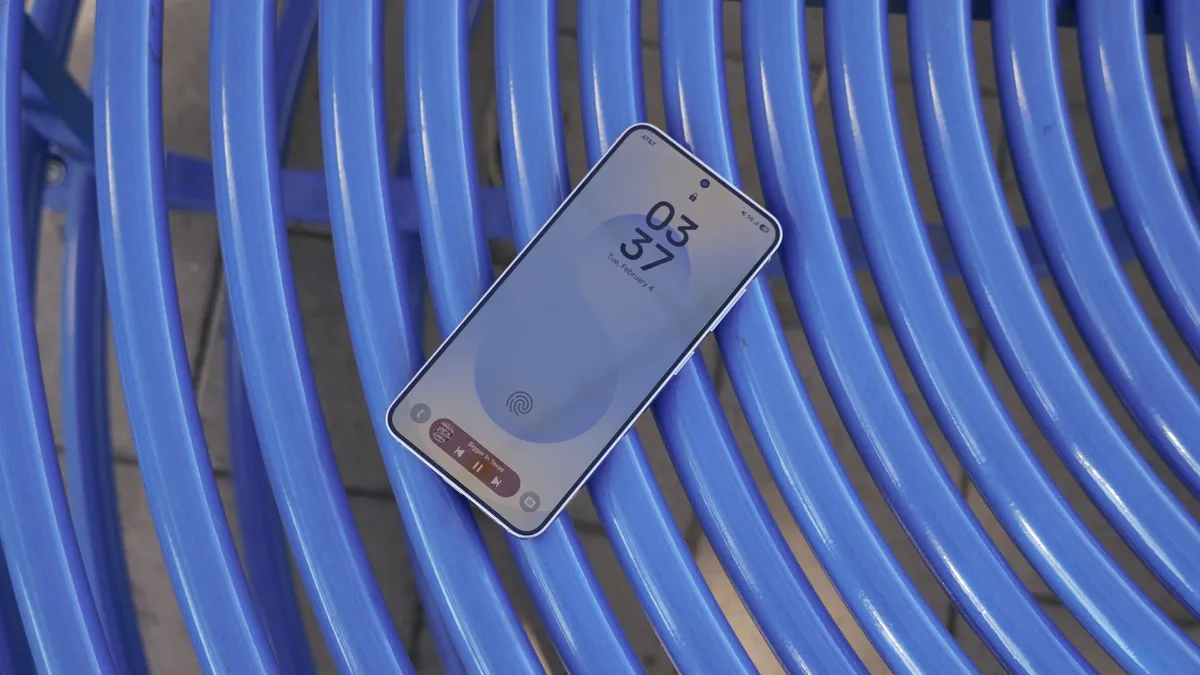
At a time when flagships are getting larger and larger, the base-model Samsung Galaxy S25 feels like a breath of fresh air. The standard Galaxy S25 sports a 6.2-inch AMOLED display, which is the smallest of the major Android flagships. That's either a pro or a con, depending on whether you prefer a more compact form factor. This model was formerly the cheapest of the bunch (before the FE came along), starting at just $800 and frequently available for much less with post-launch discounts.
Don't be fooled, however — the Galaxy S25 isn't like the rest of Samsung's flagship lineup. The base model has shortcomings compared to the pack, like 128GB storage, no support for UWB, and a lower-resolution display without ProScaler AI. Although other AI features, like Now Brief, are available on the base Galaxy S25, the above omissions are notable oversights.
The cameras also haven't been updated since 2022, and they leave a lot to be desired.

Now, for the good. Samsung is using the Qualcomm Snapdragon 8 Elite for Galaxy chipset across the board on the Galaxy S25 series, meaning the base model has the same processor as the most expensive model. One UI 8 is also available on the Galaxy S25 as of September 2025.
While the Galaxy S25's display may be the worst of the lot on the spec sheet, it doesn't underwhelm in person. The AMOLED 2X display supports variable refresh rates up to 120Hz, plus loads of other specs like HDR10+ and 2,600 nits of peak brightness. The FHD+ display (1080 x 2340) is still gorgeous to use and plenty bright.
With a 4,000mAh battery and support for slow 25W wired charging, the Galaxy S25 isn't outstanding for battery life. However, it's better than the Galaxy S25 Edge (for whatever that's worth) and decent overall. You can get a full day of charge with moderate usage, easily.
The Samsung Galaxy S25 is for the smartphone user who just wants the basics in a compact form factor and at a fairly affordable price. There's enough power here to make this phone feel like a bona-fide flagship without going overboard. If you can look past the cameras and slight hardware compromises, the Galaxy S25 is a nice pickup.
Samsung Galaxy S25 Plus: Finding a practical middle ground

The Samsung Galaxy S25 Plus is the middle child of the lineup, though that isn't exactly a bad thing. It's not very original, with the same general design and few hardware upgrades compared to its predecessor. Like the base Galaxy S25, the Galaxy S25 Plus retains the same camera hardware as the Galaxy S22 series. Still, at $999 and packing a 6.7-inch display, the Galaxy S25 Plus tends to hit the right price and size for a lot of people.
It builds upon the building blocks of the Galaxy S25, elevating them to provide a more comprehensive experience. The device features a larger battery with a 4,900mAh capacity, and the larger size enables a 45W wired charging speed. That addresses a common gripe with the base model, and it's not the only one.
The Galaxy S25 Plus also starts at 256GB of storage with UFS 4.0 support, a UWB chip for precise location finding, and a larger (and improved) QHD+ display with ProScaler AI. Be sure to manually enable QHD+ resolution if you purchase it, though.
The improved display quality could be a key reason to pick the Galaxy S25 Plus or Edge over the base Galaxy S25, which is limited to 1080p, and can't take advantage of higher-resolution content from your favorite streaming service. Meanwhile, the Galaxy S25 Plus' display has a resolution of 3120 x 1440, which will be better equipped to handle high-res movies and TV shows closer to 4K.
ProScaler will also upscale the content on your screen with AI, so you'll get a better viewing experience — even if the TV shows or movies you're streaming aren't natively delivered in 4K.

The aging triple-camera system leaves us wanting more, but it's still relatively solid by 2025 standards. You get a 50MP primary shooter, a 12MP ultrawide lens, and a crucial 10MP telephoto lens supporting up to 3x optical zoom.
At 75.8mm x 158.4mm x 7.3mm and weighing 190 grams, the Galaxy S25 Plus is designed for individuals who require more than the base model in a somewhat compact form factor. The Galaxy S25 Ultra is better, but it's also an expensive behemoth. Out of the four Galaxy S25 models, the Plus is clearly the most practical option for most buyers.
Samsung Galaxy S25 Edge: The Plus, with a bunch of subtractions

Contrary to what you may have heard, the positioning of the Galaxy S25 Edge is fairly simple. It's for people who want the 6.7-inch screen size of the Plus model in a thinner and lighter form factor — and are willing to give up a whole lot to get it.
No matter how you slice it, the Galaxy S25 Edge's dual-camera system, minuscule 3,900mAh battery, and 25W maximum charging speed are clear compromises.

Now, there are some redeeming qualities. The Samsung Galaxy S25 Edge still uses the Snapdragon 8 Elite chip and runs One UI 7, so it'll get the same general experience as all the other models. It also borrows the Galaxy S25 Ultra's 200MP main camera sensor, which the Galaxy S25 and Galaxy S25 Plus can't claim.

Measuring just 158.2 x 75.6 x 5.8 mm, it's hard to understate just how thin the Galaxy S25 Edge is. The phone's thickness is arguably more impressive, at only 163 grams — that's 27 grams lighter than the Galaxy S25 Plus and 55 grams lighter than the Galaxy S25 Ultra.
To love this phone, you'll need to be prepared to use it without a case and recharge it daily, and likely before the day ends. If those two qualifiers sound okay with you, and you've always loved thin devices, the Galaxy S25 Edge could be your next smartphone. It starts at $1,099, a bit higher than the Galaxy S25 Plus.
Samsung Galaxy S25 Ultra: Top of the line

Finally, we have the Samsung Galaxy S25 Ultra, which is decisively for people who want the best and are willing to pay for it. At $1,299, the Galaxy S25 Ultra isn't cheap by any means. However, it tries to justify that starting price with loads of features, including a massive 6.9-inch display, an inbuilt S Pen, and a robust camera system.
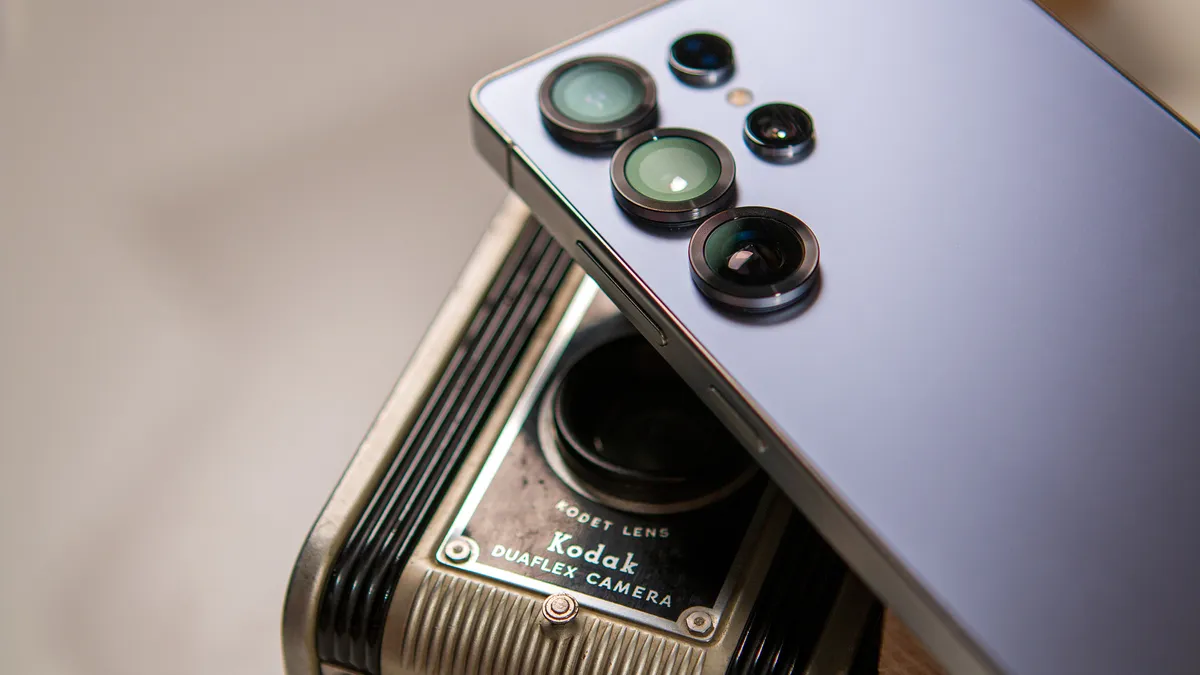
It's the only Galaxy S25 model to receive a camera upgrade this year, although the primary 200MP camera sensor is unchanged. Instead, the ultrawide camera is now using a 50MP sensor, up from 12MP. You also get a 10MP, 3x telephoto lens and a 50MP, 5x telephoto lens. In other words, the Galaxy S25 Ultra offers the best camera system available on a Samsung phone.
It's for power users first and foremost, with a Snapdragon 8 Elite for Galaxy chipset, 12GB of RAM, and a 5,000mAh battery capacity. Plus, it has all the AI features from the rest of the Galaxy S25 lineup. That includes the ProScaler, which can upscale content to make it look more vibrant on the 3120 x 1440 resolution display. Like the Plus and Edge models, the Samsung Galaxy S25 Ultra is perfect for watching high-res content. It's not quite capable of delivering a 4K experience, but it's still a step up from 1080p.
At a size of 162.8 x 77.6 x 8.2mm and weighing 218 grams, the Galaxy S25 Ultra isn't small. It's a big phone with an even bigger feature set. If you like that sort of thing, the Galaxy S25 Ultra will check boxes that no other Android phone can.

